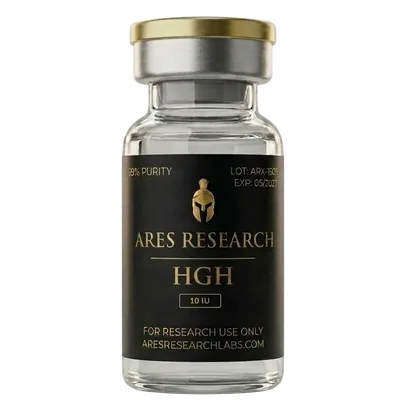
Tirzepatide Research Overview
Tirzepatide is the world's first dual GIP/GLP-1 receptor co-agonist — a 39-amino acid synthetic peptide (Mounjaro; Zepbound) achieving unprecedented weight loss of up to 22.5% in clinical trials, and redefining the ceiling of pharmacological obesity treatment through simultaneous activation of two complementary incretin hormone pathways.
Tirzepatide (Ares Cut-2) research material is listed with current batch specifications and independent testing documentation.\n\n## Background: The Twincretin Concept
Tirzepatide (LY3298176; Eli Lilly) emerged from a rational drug design programme seeking to harness both major incretin hormones simultaneously. GLP-1 (glucagon-like peptide-1) was established as a therapeutic target by Byetta (exenatide) in 2005 and refined through progressively more potent analogues including liraglutide and semaglutide. GIP (glucose-dependent insulinotropic polypeptide), the other major incretin, was long considered unsuitable as a drug target — paradoxically, GIP receptor (GIPR) agonism appeared to have minimal glucose-lowering effect in type 2 diabetes, and early GIPR antagonism studies suggested it might be beneficial. This created apparent confusion about GIP's therapeutic role.
The resolution came through a deeper understanding of GIP's metabolic role: GIP's insulin-secreting action is impaired in T2DM due to GIPR resistance, but its non-pancreatic effects — adipose tissue lipid metabolism regulation, central appetite suppression, bone anabolism, and anti-inflammatory signalling — remain active. Tirzepatide's dual agonism appears to rescue GIP signalling synergistically with GLP-1, producing metabolic effects greater than either pathway alone — a "twincretin" effect validated across the SURMOUNT and SURPASS trial programmes.
- Structure: 39-amino acid GIP-based backbone with GLP-1 pharmacophore elements; C18 fatty diacid for albumin binding
- Plasma Half-life: ~5 days (albumin binding)
- Receptor Targets: GIPR (primary scaffold) + GLP-1R (co-agonist)
- FDA Approvals: Mounjaro (T2DM, 2022); Zepbound (obesity, 2023); HFpEF with obesity (2024)
- Administration: Once-weekly SC injection
- Peak Weight Loss Achieved: 22.5% at 15 mg/week (SURMOUNT-1, 72 weeks)
Dual Receptor Mechanism
GLP-1R Agonism
Tirzepatide's GLP-1R activity mirrors semaglutide's mechanism: Gs/cAMP-mediated insulin secretion from beta cells, glucagon suppression from alpha cells, delayed gastric emptying, and central hypothalamic GLP-1R activation producing appetite suppression via NPY/AgRP suppression and POMC/CART upregulation. This component alone would place tirzepatide in the same pharmacological class as semaglutide — a potent GLP-1R agonist with established metabolic and cardiovascular effects.
GIPR Agonism: The Differentiating Mechanism
Tirzepatide's GIPR agonism adds a qualitatively different layer of metabolic regulation. GIPR is expressed in adipocytes, where its activation modulates fatty acid metabolism and adipose tissue insulin sensitivity — effects that complement GLP-1R's central appetite suppression with peripheral adipose biology. GIPR activation in adipocytes appears to enhance lipid storage efficiency during caloric restriction (preserving lean mass while maximising fat loss) and reduces adipose tissue inflammation. In the hypothalamus, GIPR co-activation with GLP-1R produces synergistic appetite suppression through partially non-overlapping neural circuits — explaining why tirzepatide produces greater satiety and lower caloric intake than GLP-1R agonism alone at equivalent doses.
A counterintuitive but well-validated observation is that GIPR antagonism (blocking GIP) also produces weight loss in some experimental contexts — suggesting GIP's role in energy balance is context-dependent and bidirectional. Tirzepatide's agonism vs. antagonism paradox has been resolved by understanding that tirzepatide's GIPR agonism in the CNS reduces food intake (consistent with GIP's anorexigenic central role) while its peripheral GIPR agonism improves adipose insulin sensitivity — both ultimately weight-reducing effects through different mechanisms.
Clinical Weight Loss Outcomes
The SURMOUNT-1 trial enrolled 2,539 adults with obesity (BMI ≥30 or ≥27 with comorbidities, without T2DM) and demonstrated that tirzepatide 15 mg weekly produced a mean body weight reduction of 22.5% — exceeding any previously approved pharmacotherapy and approaching the weight loss achievable with bariatric surgery (20–30%). At this dose, 57% of participants achieved ≥20% body weight reduction — outcomes previously seen only with surgical intervention.
Tirzepatide vs Semaglutide: The SURMOUNT-5 Direct Comparison
The SURMOUNT-5 trial (2024) was the first head-to-head RCT directly comparing tirzepatide 10–15 mg vs semaglutide 2.4 mg weekly in adults with obesity without T2DM. Tirzepatide produced significantly greater weight loss: −20.2% vs −13.7% for semaglutide (estimated treatment difference: −6.5 percentage points, p<0.001). This head-to-head superiority data positions tirzepatide as the pharmacological standard for maximal weight loss, while semaglutide's cardiovascular outcome data (SELECT trial) currently provides a stronger evidence base for cardiovascular risk reduction — a distinction that will narrow as tirzepatide's cardiovascular outcome trials mature.
| Parameter | Tirzepatide (Mounjaro/Zepbound) | Semaglutide (Ozempic/Wegovy) | | --- | --- | --- | | Receptor Targets | GIPR + GLP-1R (dual agonist) | GLP-1R only | | Weight Loss (max approved dose) | ~22.5% (15 mg/week) | ~14.9% (2.4 mg/week) | | Cardiovascular Outcomes RCT | SURPASS-CVOT (positive, 2024) | SELECT (positive, 2023); SUSTAIN-6 | | HbA1c Reduction (T2DM) | ~2.0–2.4% (superior) | ~1.5–1.8% | | FDA Approvals | T2DM; Obesity; HFpEF+obesity (2024) | T2DM; Obesity; Sleep apnoea (2024) | | Nausea Rate | ~30–35% (comparable) | ~40–44% | | Lean Mass Preservation | Better (GIPR adipose effect) | Standard GLP-1R effect | | Head-to-Head Winner | Yes — SURMOUNT-5 (weight loss) | More CV outcome data currently |
Lean Mass Research Consideration > A critical concern with all significant weight loss pharmacotherapy is lean mass (muscle) loss alongside fat mass reduction. SURMOUNT-1 body composition data showed that approximately 25–30% of tirzepatide's weight loss came from lean mass — a ratio similar to diet-induced weight loss. The GIPR agonism component may partially mitigate lean mass loss compared to GLP-1R-only approaches by improving adipose insulin sensitivity and preserving the hormonal environment for muscle protein synthesis, but co-administration with resistance exercise training and adequate protein intake remains the evidence-based strategy for preserving lean mass during pharmacological weight loss.
Emerging Research Applications
Heart Failure with Preserved Ejection Fraction (HFpEF): The SUMMIT trial demonstrated tirzepatide significantly reduced the composite of CV death or worsening heart failure in HFpEF patients with obesity — earning FDA approval for this indication in 2024, the first pharmacotherapy with this specific indication. The mechanism involves reduced pericardial fat, improved ventricular filling dynamics, and direct cardiac GLP-1R and potentially GIPR effects on myocardial metabolism.
MASH/NASH: The SYNERGY-NASH Phase III trial is evaluating tirzepatide in metabolic dysfunction-associated steatohepatitis. Given tirzepatide's superior metabolic profile vs semaglutide, including greater visceral fat reduction and better insulin sensitisation, early data suggests potentially superior hepatic histology outcomes.
Obstructive Sleep Apnoea: SURMOUNT-OSA demonstrated tirzepatide produced ~55–63% reductions in AHI in obesity-related OSA — supporting regulatory review for this indication following semaglutide's approval in the same space.
References
- Jastreboff AM, et al. "Tirzepatide once weekly for the treatment of obesity." *N Engl J Med*. 2022;387(3):205–216.
- Frías JP, et al. "Tirzepatide versus semaglutide once weekly in patients with type 2 diabetes." *N Engl J Med*. 2021;385(6):503–515.
- Bhatt DL, et al. "Tirzepatide for heart failure with preserved ejection fraction and obesity." *N Engl J Med*. 2024;391(24):2292–2308.
- Willard FS, et al. "Tirzepatide is an imbalanced and biased dual GIP and GLP-1 receptor agonist." *JCI Insight*. 2020;5(17):e140532.
- Dahl D, et al. "Effect of subcutaneous tirzepatide vs placebo added to titrated insulin glargine on glycemic control in patients with type 2 diabetes." *JAMA*. 2022;327(17):1641–1651.
- Wadden TA, et al. "Tirzepatide after intensive lifestyle intervention in adults with overweight or obesity: the SURMOUNT-3 trial." *Nat Med*. 2023;29(9):2211–2219.
Running the numbers for a protocol? Use the research calculators to convert mg, mL, and syringe units.
Related Research Articles
Best Peptide Stack for Summer Cut Research 2026
Summer is when "cut" research protocols see peak demand — simultaneous fat mass reduction and muscle preservation is the most searched body composition research goal from June through August. Here's the mechanistically justified summer research stack.
Best Research Peptides for Body Recomposition
Body recomposition research — fat loss and muscle preservation simultaneously — requires compounds from at least two distinct mechanistic categories. Here's the optimal summer 2026 research design combining GLP-class and GH-axis compounds for the complete recomposition picture.
Best Peptides for Weight Loss Research
The metabolic research peptide landscape has a clear evidence hierarchy — from the most mature Phase 3 data to emerging Phase 2 findings. Here's how each major compound ranks by evidence strength, mechanism complexity, and what makes it distinct for fat mass research.
Visceral Fat Research and Peptides 2026 — GLP, Tesamorelin,
Visceral adipose tissue — metabolically active fat surrounding abdominal organs — is documented as more metabolically consequential than subcutaneous fat, making it a specific research target for several compound categories through distinct mechanisms.
Related Research Materials
Parent Research Hubs
Neutral, moderated research discussion. Laboratory use only.
More compound guides, hubs, and educational research materials.