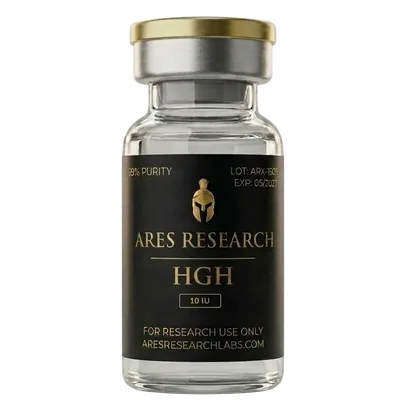
Research Compound COA Checklist — Deep-Dive Edition
A practical, deeper checklist for evaluating Certificates of Analysis on research-grade peptides — what to look for, what to avoid, and how to verify compound quality.
Why the COA Is Your First Line of Quality Defense
A Certificate of Analysis is the documentary record that links a specific batch of research compound to the analytical data confirming its identity, purity, and physical characteristics. Without a COA — or with a fraudulent or incomplete one — a researcher has no objective basis for knowing what is actually in their vial. This is not a bureaucratic formality. Impure, misidentified, or degraded compounds produce confounded results, waste research resources, and in in vivo contexts introduce variables that can invalidate entire experimental series.
The checklist below is structured in order of evaluation priority. Items marked Required are non-negotiable for research-grade material. Items marked Recommended represent best practice. Items marked Optional are context-dependent but add meaningful quality assurance in specific research settings.
COA Checklist Progress0 of 20 items verified
01
Compound Identification
Full compound name and common synonyms listed
The COA should state the full IUPAC or systematic name alongside any common names. For peptides, this includes the full amino acid sequence in single- or three-letter code notation. A COA listing only a brand name or abbreviation without sequence is insufficient for research traceability.
Required
Molecular formula and theoretical molecular weight stated
The molecular formula (e.g., C₃₈H₄₉N₉O₅) and theoretical molecular weight in Daltons (free base and/or salt form) must be present. These are the reference values against which mass spectrometry data is compared to confirm identity.
Required
CAS number provided where applicable
A CAS (Chemical Abstracts Service) registry number allows cross-referencing the compound against independent chemical databases. Not all novel or modified peptides have assigned CAS numbers, but established research peptides should.
Recommended
Salt form and counter-ion specified
Most synthetic peptides are supplied as a salt — most commonly acetate or trifluoroacetate (TFA). The salt form affects the true peptide content per milligram (net peptide weight vs gross weight) and must be documented for accurate dosing calculations.
Required
02
Lot and Batch Traceability
Unique lot number present and matches vial label
Every COA must carry a unique lot or batch number that corresponds to the specific production run. This number should match what is printed on the vial label or packaging. A COA without a lot number is a generic document not tied to your specific material — it provides no meaningful quality assurance.
Required
Analysis date is recent and plausible
The date on which analytical testing was performed should be documented. A COA dated years before the current date may indicate the document is being recycled across multiple production lots — a serious quality control failure. Analysis date should be within 12 months of dispatch for most compounds.
Required
Manufacturing or testing facility identified
The name or identifier of the analytical laboratory that performed the testing adds accountability. Third-party laboratory verification is a higher standard than in-house testing, as it eliminates the conflict of interest of a supplier self-certifying their own product.
Recommended
03
Purity Analysis (HPLC)
HPLC purity percentage reported as an actual measured value
The COA must state the actual measured purity (e.g., "99.3%") — not a range or minimum threshold such as "≥98%." A real COA reports the number from the specific lot's analysis. A stated minimum without an actual result indicates either the lot was not individually tested or the data is being withheld.
Required
HPLC method parameters specified (column type, detection wavelength, gradient)
Without knowing the column type (e.g., C18 reverse phase), detection wavelength (214 nm for peptide bonds; 280 nm for aromatic residues), and mobile phase gradient, HPLC purity data cannot be reproduced or critically evaluated. A COA reporting "HPLC purity: 99%" with no method detail is not independently verifiable.
Recommended
HPLC chromatogram image available on request
The raw chromatogram — showing the actual peak profile, retention time, and relative peak areas — is the underlying data behind the purity percentage. Reputable suppliers provide chromatogram images upon request. A supplier who cannot or will not provide the chromatogram has no verifiable data to support their stated purity figure.
Recommended
Purity meets research-grade threshold (≥98% minimum; ≥99% preferred)
For rigorous preclinical research, ≥99% HPLC purity is the accepted standard. A purity below 95% is unsuitable for published research. Between 95–98% may be acceptable for preliminary screening but should not be used for dose-response studies, receptor pharmacology, or in vivo protocols.
Required
04
Identity Confirmation (Mass Spectrometry)
Mass spectrometry data present with measured molecular weight
ESI-MS or MALDI-TOF data confirming the compound's molecular weight is essential for identity verification. The COA must state the measured m/z value(s) and the derived molecular weight. This confirms that the compound present is the correct peptide — not merely that a highly pure unknown compound is present.
Required
Measured MW matches theoretical MW within acceptable tolerance (±1 Da)
For peptides under ~3,000 Da, measured and theoretical molecular weights should match within ±1 Da. For larger peptides (3,000–10,000 Da), a tolerance of ±2 Da is generally acceptable given instrument precision. A discrepancy greater than this indicates sequence error, unexpected modification, or incorrect compound identification.
Required
MS ionisation method specified (ESI, MALDI, APCI)
The ionisation method affects the charge states observed and the mass accuracy achievable. ESI-MS is standard for research peptides and provides multiply-charged ions that allow MW calculation from multiple charge states. Specifying the method allows independent evaluation of data quality.
Recommended
05
Physical Characteristics and Additional Testing
Physical appearance documented (colour, form)
A description of the compound's physical appearance — typically "white to off-white lyophilized powder" — provides a baseline for visual inspection on receipt. Significant deviation from the stated appearance (yellowing, browning, partial liquefaction) may indicate degradation or moisture exposure during transit.
Required
Water content (Karl Fischer) reported
Lyophilized peptides contain residual water (typically 5–15% by mass). Water content affects the true net peptide mass per vial. Without this value, the actual peptide content cannot be precisely calculated from the stated vial weight. Karl Fischer titration is the gold-standard method for water determination in lyophilized materials.
Recommended
Endotoxin (LAL) testing performed for in vivo use
Endotoxin (lipopolysaccharide) from gram-negative bacterial contamination cannot be detected by HPLC or MS. It causes potent inflammatory responses in vivo that will confound any biological endpoint. For any compound used in live animal research, a Limulus Amebocyte Lysate (LAL) endotoxin test result should be present on the COA, with a result below 1 EU/mg for parenteral use.
Required
Residual solvent content reported (TFA, acetonitrile, DMF)
Synthesis and purification solvents — particularly trifluoroacetic acid (TFA), acetonitrile, and DMF — can remain in the final lyophilized product. TFA has demonstrated biological activity at concentrations that may be present in inadequately purified peptides. Residual solvent content should be tested and reported, particularly for compounds used in cell culture or in vivo models.
Optional
COA Red Flags: When to Reject a Document
The following findings on a COA, or its absence, are grounds to reject the document and request a corrected version or seek an alternative supplier:
⚑
No Lot Number
A COA without a unique lot number is not linked to your specific vial. It may be a generic template document applied to all shipments regardless of actual test results. Always verify the lot number matches your vial label exactly.
⚑
Purity Stated as Range Only (e.g. "≥98%") Without Actual Measured Value
Real analytical results are specific numbers. A stated range or minimum is a specification, not an analytical result. If no actual measured purity percentage from the specific lot is provided, the compound has not been individually tested — or the result is being concealed.
⚑
Mass Spectrometry Data Absent
Without MS data, there is no confirmation the compound is the correct peptide. High HPLC purity alone only confirms a highly pure substance is present — not that it is the intended compound. Both HPLC and MS are required together for complete quality verification.
⚑
Measured MW Discrepancy Greater Than ±2 Da
A molecular weight discrepancy beyond instrument tolerance indicates a sequence error (deleted or substituted amino acid), an unexpected modification (oxidation, deamidation, incomplete deprotection), or an incorrectly labelled compound entirely. Do not use the material without resolution from the supplier.
⚑
Analysis Date More Than 18 Months Old
A COA dated significantly before the purchase date may indicate the supplier is using a single historical test document for all lots of a compound rather than testing each production batch. Fresh material should have a recent COA.
⚑
No HPLC Method Details
A purity figure without a specified method (column, wavelength, gradient) cannot be independently reproduced or critically evaluated. This absence suggests the data may not have been generated by a legitimate analytical laboratory following documented procedures.
⚑
Supplier Refuses to Provide Chromatogram on Request
Legitimate analytical laboratories retain raw chromatogram data for all tested lots. A supplier who cannot or will not provide the underlying chromatogram upon reasonable request has no verifiable evidence for their stated purity figure.
Quick Reference: Acceptable vs Unacceptable COA Data
COA Field
Acceptable
Unacceptable
HPLC Purity
99.3% (specific measured value)
≥98% (range only, no measured result)
Mass Spec Result
Observed: 712.0 \[M+H\]⁺ · Expected: 711.9 · ✓ Confirmed
Absent, or "MS: Pass" with no values stated
Lot Number
IPA-2026-0312-A (specific, matches vial label)
None, or "N/A"
Analysis Date
March 12, 2026 (within 12 months of receipt)
January 15, 2023 (recycled document)
HPLC Method
C18 column, 214 nm, ACN/H₂O + 0.1% TFA gradient
"HPLC" with no further detail
Endotoxin (in vivo use)
<0.5 EU/mg (LAL method)
Not tested / absent
Appearance
White lyophilized powder
Absent from COA
Salt Form
Acetate salt (clearly specified)
Not stated
Best Practice
File a copy of the COA alongside your research notes for every compound used in a published protocol. Journals and institutional review processes increasingly require traceability documentation for research materials — having the lot-specific COA on record allows you to demonstrate the quality standard of material used in any experiment, and enables retrospective investigation if questions about compound quality arise after publication.
[Research Use Only](/standards/research-use-compliance) — Disclaimer This checklist is prepared for laboratory and research reference purposes only. All guidance pertains to the evaluation of research-grade compounds for in vitro and preclinical research contexts. This content does not constitute medical advice, regulatory guidance, or legal certification of compound quality. Pharmaceutical-grade quality standards for human use involve additional regulatory requirements beyond those described here. Researchers must comply with all applicable institutional and jurisdictional regulations.
Running the numbers for a protocol? Use the research calculators to convert mg, mL, and syringe units.
Related Research Articles
Common Mass Spectrometry Analysis Mistakes to Avoid
Discover how to avoid common mass spectrometry analysis mistakes that hinder results. Learn essential tips for accurate, reliable testing.
Sourcing High Purity Research Chemicals: 2026 Guide
Unlock the secrets to sourcing high purity research chemicals in 2026. Ensure accuracy and reliability with our comprehensive guide.
Calibration Curves in Laboratory Assays: A Practical Guide
Discover what a calibration curve in laboratory assays is and how it quantifies unknown samples. Master your analytical methods today!
Laboratory Compound Procurement Checklist for Researchers
A practical procurement checklist for researchers sourcing laboratory compounds — vendor qualification, COA review, lot traceability, and compliance verification.
Parent Research Hubs
Neutral, moderated research discussion. Laboratory use only.
More compound guides, hubs, and educational research materials.