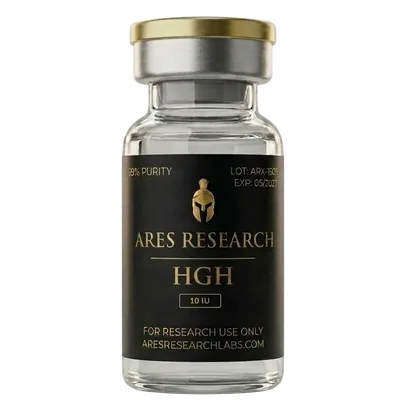
Why Peptide Quantification Accuracy Matters in Research
Why accurate peptide quantification — via AAA, UV/Vis, BCA, HPLC, and LC-MS — is essential for reproducible research outcomes, with practical guidance on assay selection and orthogonal verification.
Why Peptide Quantification Accuracy Matters in Research
---
TL;DR: > > - Peptide quantification accuracy reflects how closely measured amounts match true sample values with minimal bias and error. Accurate measurement is essential for reproducible research, as errors like ratio compression and matrix effects can distort biological insights. Employing advanced methods and verifying absolute peptide content with amino acid analysis ensures reliable quantification critical for valid experimental conclusions.
---
Peptide quantification accuracy is defined as the capacity to measure the true amount of a peptide in a sample with minimal systematic bias and random error, and it is the foundational requirement for valid biochemical and pharmacological research. Without it, every downstream conclusion, from dose-response modeling to biomarker validation, rests on unreliable data. Modern analytical platforms such as LC–MS/MS, DIA-NN, and QuantUMS have advanced the field considerably, yet systematic errors from signal interference, matrix effects, and purity misinterpretation remain pervasive. Understanding why peptide quantification accuracy matters is not an abstract methodological concern. It is a practical prerequisite for reproducible science.
Why peptide quantification accuracy matters for experimental validity
Quantification errors in peptide research do not occur randomly. They arise from identifiable, often predictable sources that researchers can address once they understand the mechanisms involved.
Signal interference and ratio compression
Ratio compression bias is one of the most consequential sources of inaccuracy in LC–MS/MS proteomics, particularly at low precursor abundance. When co-isolated interfering ions contribute to the MS/MS signal, the measured ratio between labeled and unlabeled peptides is compressed toward unity, making real fold-changes appear smaller than they are. This distortion is not detectable through standard precision metrics, which means researchers can generate highly reproducible but systematically wrong data.
The problem is compounded by the fact that standard CV metrics do not detect systematic interference errors. A coefficient of variation below 5% signals good precision, but it says nothing about whether the measured value reflects the true peptide amount. Precision and accuracy are distinct properties, and conflating them is a common source of flawed experimental interpretation.
Matrix effects and lower limits of quantification
Matrix effects represent another major challenge, particularly in bioanalytical contexts where peptides are quantified in complex biological fluids such as plasma, urine, or saliva. Endogenous compounds co-eluting with the target peptide can suppress or enhance ionization, directly distorting the measured signal. Low-dose peptide quantification requires sensitive lower limits of quantification (LLOQ) around 0.1 ng/mL, achievable only through careful workflow optimization including sample cleanup, chromatographic selectivity, and instrument sensitivity tuning.
The following sources of quantification error are the most frequently encountered in LC–MS/MS peptide research:
- Ratio compression from co-isolated interfering precursors, most severe at low abundance
- Matrix-induced ionization suppression or enhancement, distorting absolute signal intensity
- Chromatographic purity misinterpretation, where HPLC area percentages are treated as mass content
- Insufficient LLOQ, causing unreliable quantification of low-concentration peptides
- Inadequate blank subtraction, allowing background signal to inflate apparent peptide levels
Each of these errors has a direct consequence on research conclusions. A dose-response experiment built on a peptide stock with miscalculated active content will produce a potency curve that cannot be reproduced by another laboratory using a properly characterized stock.
Pro Tip: _When setting up a new peptide quantification assay, run a parallelism experiment using serial dilutions of your biological matrix spiked with the target peptide. Deviations from expected linearity reveal matrix effects before they contaminate your primary dataset._
How advanced analytical methods improve measurement reliability
Addressing the sources of error described above requires both instrument-level optimization and sophisticated software-driven data processing. The field has advanced substantially in 2026, with several tools now offering quantification frameworks that go beyond simple peak integration.
- QuantUMS algorithm integration. The QuantUMS method dynamically tunes feature weights to integrate MS1 and MS/MS signals, reducing interference-caused bias across varying loading amounts. It also estimates quantification uncertainty at the individual peptide level, providing confidence scores that global quality filters cannot deliver. This means researchers can identify and exclude unreliable peptide measurements without discarding entire datasets.
- MS1 resolution and scan speed optimization. Instrument parameter choices directly determine the balance between precision and accuracy. An optimized DIA method at MS1 60,000 resolution with rapid MS2 scans achieved a median percent CV below 8%, demonstrating that moderate MS1 resolution combined with fast MS2 acquisition outperforms either extreme. Excessively high MS1 resolution increases multiplexing complexity and introduces variability rather than reducing it.
- DIA-NN software for large-scale proteomics. DIA-NN applies neural network-based spectral library matching to improve peptide-level quantification in data-independent acquisition workflows. Its ability to handle missing values and low-abundance peptides makes it particularly valuable for biomarker discovery studies where sensitivity is critical.
- Quantity-specific quality control metrics. Moving beyond global CVs to peptide-specific quality scores allows researchers to flag individual measurements affected by interference or poor chromatographic separation. QuantUMS quality metrics enable this granular assessment, replacing blunt dataset-wide filters with targeted exclusion criteria.
- Targeted versus untargeted workflow selection. Targeted methods such as selected reaction monitoring (SRM) and parallel reaction monitoring (PRM) offer superior sensitivity and specificity for known peptides. Untargeted DIA workflows provide broader coverage but require more rigorous post-acquisition filtering. Choosing the appropriate workflow based on study objectives is itself a determinant of quantification accuracy.
Statistic callout: An optimized HILIC-DIA-MS method achieved a median %CV below 8% for polar peptide quantification, a benchmark that requires deliberate parameter selection rather than default instrument settings.
The practical implication is that no single tool or parameter guarantees accuracy. Researchers must treat quantification as a system-level property, optimizing sample preparation, chromatographic conditions, acquisition parameters, and data processing in concert.
What purity claims actually mean for peptide dosing
The distinction between chromatographic purity and absolute peptide mass content is one of the most consequential and most frequently overlooked issues in experimental peptide research. A peptide labeled as 98% pure by HPLC area percentage is not necessarily 98% peptide by mass. HPLC purity overestimates actual peptide mass content because counterions such as trifluoroacetate (TFA) salts, residual water, and other non-UV-absorbing species are not detected by standard UV chromatography but contribute substantially to the total mass of the material.
The following comparison illustrates the practical difference between these two purity concepts:
Purity metricWhat it measuresTypical discrepancyHPLC area % (chromatographic purity)UV-absorbing species relative to total UV signalDoes not account for TFA salts, water, or non-UV speciesAbsolute peptide mass fractionTrue peptide content as a proportion of total material weightCan be 70–80% even when HPLC shows 98%Amino acid analysis (AAA)Molar composition of amino acid residues after hydrolysisGold standard for absolute content determinationNitrogen analysisTotal nitrogen content correlated to peptide massUseful orthogonal confirmation method
A peptide labeled 98% pure by HPLC may contain only 70–80% peptide by mass, and TFA counterion salts can account for approximately 25% of the total material weight. This means a researcher preparing a 1 mg/mL stock solution from such a material is delivering substantially less active peptide than intended, skewing dose calculations and potency assessments.
Pharmaceutical impurity guidance requires quantitative characterization of impurities down to 0.1% for regulatory reporting, a standard that demands accurate assay methods rather than chromatographic estimates alone. For preclinical and academic research, the same rigor applies whenever dose accuracy is critical to the experimental question.
Amino acid analysis remains the most reliable method for determining absolute peptide content, as it measures the actual molar composition of residues after complete hydrolysis. Nitrogen analysis provides a useful orthogonal confirmation. Batch-to-batch documentation using both methods, combined with a thorough certificate of analysis, is the minimum standard for reproducible peptide research. Consistent reagent quality standards across batches are equally important, since even well-characterized peptides lose quantification reliability when supporting reagents introduce variability.
Pro Tip: _Never use HPLC area percentage alone to calculate working stock concentrations. Request amino acid analysis data from your supplier, or perform it in-house, to determine the true peptide content before preparing dose solutions._
How peptide-level quantification reveals what protein analysis misses
Protein-level quantification, which aggregates signal across all detected peptides from a given protein, is the standard output of most proteomics workflows. It is computationally convenient and statistically tractable, but it obscures biologically meaningful variation that exists at the peptide level.
The benefits of peptide-centric quantification over protein-level aggregation include the following:
- Detection of proteoform-specific changes. Different proteoforms of the same protein, arising from alternative splicing, post-translational modifications, or proteolytic processing, produce distinct peptide signatures. Protein-level aggregation averages these signals, masking proteoform-specific biology.
- Identification of disease-specific peptide signatures. In a DIA-NN reanalysis of salivary proteomics from type 2 diabetes patients, significant peptide abundance differences were observed despite minimal change at the protein level. This finding demonstrates that protein-level analysis would have missed the disease signal entirely.
- Improved biomarker sensitivity. Peptide-level data provides finer resolution for detecting early-stage or low-magnitude biological changes, which is particularly relevant in pharmacological studies where subtle dose-dependent effects must be distinguished from biological noise.
- Structural heterogeneity characterization. Post-translational modifications such as phosphorylation, glycosylation, and acetylation are detectable only at the peptide level. Protein-level quantification cannot distinguish between modified and unmodified forms, limiting mechanistic interpretation.
- Translational research integration. Peptide-level signatures identified in discovery proteomics can be directly translated into targeted assays using SRM or PRM, creating a direct path from biomarker discovery to clinical validation.
The implications for experimental design are direct. Studies investigating disease progression, drug mechanism of action, or post-translational regulation should incorporate peptide-level quantification as a primary analytical layer rather than treating it as a secondary output. The additional computational complexity is justified by the biological resolution gained.
Key takeaways
Accurate peptide quantification requires controlling interference bias, verifying absolute peptide mass content beyond chromatographic purity, optimizing instrument parameters, and analyzing data at the peptide level to capture biologically meaningful variation.
PointDetailsRatio compression distorts resultsInterference in LC–MS/MS compresses measured fold-changes, producing reproducible but inaccurate data.HPLC purity overstates peptide contentA peptide labeled 98% pure may contain only 70–80% active mass due to TFA salts and moisture.Instrument parameters determine accuracyMS1 resolution at 60,000 with rapid MS2 scans achieves median %CV below 8% in optimized DIA methods.Peptide-level analysis reveals hidden biologyDisease-specific peptide signatures in type 2 diabetes salivary data were invisible at the protein level.QuantUMS improves individual peptide confidencePeptide-specific quality metrics from QuantUMS replace global CVs with targeted, uncertainty-aware filtering.
Ares Research’s perspective on quantification accuracy in practice
From our position working with researchers across biochemistry and pharmacology, the single most persistent source of experimental error we observe is not instrument failure or software limitation. It is the uncritical acceptance of chromatographic purity as a proxy for peptide content. Researchers receive a certificate of analysis showing 98% HPLC purity, prepare a stock solution based on that figure, and proceed through an entire dose-response study without recognizing that their actual active peptide concentration may be 20 to 25% lower than intended. The potency curve shifts. The EC50 appears higher than it should. The compound looks less active than it is.
The second most common issue is the conflation of precision with accuracy. A well-optimized LC–MS/MS method can produce highly reproducible measurements of a systematically biased value. Researchers see tight CVs and conclude their data is reliable, when in fact the interference-driven ratio compression documented in QuantUMS validation studies has been present throughout. Precision is a necessary but insufficient condition for accuracy, and the distinction matters enormously when comparing results across laboratories or translating findings into pharmacological models.
What we advocate for is a layered quality control approach: amino acid analysis to verify absolute peptide content before any dosing experiment, peptide-specific quality metrics rather than global dataset filters, and DIA workflows with properly optimized acquisition parameters for discovery proteomics. The tools exist. QuantUMS, DIA-NN, and modern HILIC-DIA-MS methods provide the analytical framework. The gap is in how consistently researchers apply them, particularly in academic settings where throughput pressures favor speed over rigor.
The growing importance of peptide-level biomarker discovery in translational research makes this gap increasingly consequential. As peptide-centric analysis moves from specialized proteomics laboratories into broader pharmacological and clinical research contexts, the standards for quantification accuracy must move with it.
_— Ares_
How Aresresearchlab supports accurate peptide quantification
Aresresearchlab provides high-purity research compounds with documentation that goes beyond standard HPLC area percentages. Every compound in the catalog is graded against high-purity compound standards that account for absolute peptide mass content, counterion load, and residual moisture, the same factors that cause systematic dosing errors when overlooked. Researchers can access the Research Compound COA Checklist to verify that every batch meets the documentation standards required for reproducible quantification. For researchers building or auditing their peptide quantification workflows, the Aresresearchlab compound catalog provides third-party tested materials with full analytical transparency, supporting the accuracy that valid experimental conclusions require.
FAQ
What is peptide quantification accuracy?
Peptide quantification accuracy is the degree to which a measured peptide amount reflects the true quantity in a sample, with minimal systematic bias and random error. It is distinct from precision, which measures reproducibility without guaranteeing correctness.
Why does ratio compression affect LC–MS/MS results?
Ratio compression occurs when co-isolated interfering ions contribute to the MS/MS signal, compressing the measured ratio between peptide species toward unity. This makes real biological differences appear smaller than they are, and it is not detectable through standard CV-based precision metrics.
How does HPLC purity differ from absolute peptide content?
HPLC area percentage measures UV-absorbing species relative to the total UV signal and does not detect TFA counterion salts, residual water, or other non-UV species. A peptide showing 98% HPLC purity may contain only 70–80% active peptide by mass, requiring amino acid analysis for accurate content determination.
What is the recommended LLOQ for low-dose peptide bioanalysis?
Sensitive bioanalytical workflows targeting low-dose peptides require an LLOQ around 0.1 ng/mL, achievable through optimized sample cleanup, selective chromatography, and instrument sensitivity tuning as demonstrated in validated LC–MS/MS methods.
Why use peptide-level rather than protein-level quantification?
Peptide-level quantification detects proteoform-specific changes, post-translational modifications, and disease-specific signatures that protein-level aggregation obscures. In type 2 diabetes salivary proteomics, significant peptide abundance differences were identified that were invisible at the protein level, demonstrating the superior biological resolution of peptide-centric analysis.
Recommended
Related Research Articles
Common Mass Spectrometry Analysis Mistakes to Avoid
Discover how to avoid common mass spectrometry analysis mistakes that hinder results. Learn essential tips for accurate, reliable testing.
Sourcing High Purity Research Chemicals: 2026 Guide
Unlock the secrets to sourcing high purity research chemicals in 2026. Ensure accuracy and reliability with our comprehensive guide.
Calibration Curves in Laboratory Assays: A Practical Guide
Discover what a calibration curve in laboratory assays is and how it quantifies unknown samples. Master your analytical methods today!
Laboratory Compound Procurement Checklist for Researchers
A practical procurement checklist for researchers sourcing laboratory compounds — vendor qualification, COA review, lot traceability, and compliance verification.
Parent Research Hubs
Neutral, moderated research discussion. Laboratory use only.
More compound guides, hubs, and educational research materials.