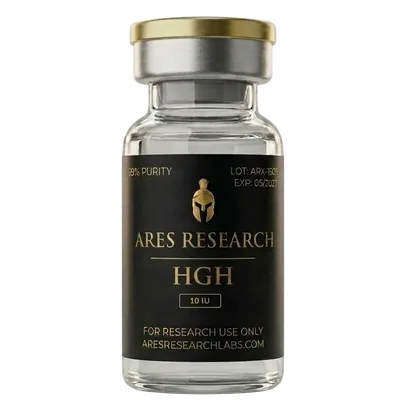
Pulsatile HGH Release — Why Pattern Matters as Much as
Growth hormone isn't simply elevated or not elevated — it's released in discrete pulses throughout the day, with the largest occurring during slow-wave sleep. Research into this pulsatile pattern has significant implications for how secretagogue timing is designed.
The clinical and research literature on growth hormone has consistently demonstrated that GH action is not simply a function of total circulating GH — the pattern of secretion, specifically its pulsatility, appears to drive different downstream effects than equivalent amounts delivered in a continuous, non-pulsatile manner.
The Physiology of Pulsatile GH Release
Endogenous GH secretion follows a pulsatile pattern driven by alternating hypothalamic GHRH (stimulatory) and somatostatin (inhibitory) signaling. In healthy adults, four to eight GH pulses occur daily, with the largest and most consistent pulse occurring approximately 60-90 minutes after sleep onset — correlating with the first slow-wave sleep stage. Between pulses, circulating GH returns to near-baseline rather than remaining continuously elevated.
Why Pulsatility Matters for Research
Research in animal models has established that pulsatile versus continuous GH delivery produces different liver IGF-1 expression patterns, different effects on body composition research endpoints, and different receptor downregulation profiles. Continuous GH exposure — as occurs with some direct research-grade HGH administration protocols — may paradoxically produce GH receptor desensitization that reduces effectiveness at equivalent total doses compared to pulsatile delivery.
Implications for Secretagogue Timing Research
Understanding pulsatile biology is what drives the research interest in timing peptide secretagogues to coincide with or amplify the body's natural nocturnal GH pulse. Rather than maintaining continuous GHRH receptor stimulation, research designs that attempt to synchronize secretagogue action with natural pulse timing aim to augment the endogenous pulsatile pattern rather than replace or override it.
Research Use Only. DisclaimerFor laboratory and research use only. Not for human consumption. This content is educational and does not constitute medical advice.
Running the numbers for a protocol? Use the research calculators to convert mg, mL, and syringe units.
Related Research Articles
Peptides for Lean Muscle Research 2026
Lean muscle research peaks in summer alongside weight loss research — researchers studying muscle preservation and growth during summer training cycles create consistent demand for the GH-axis and IGF-1 compound categories. Here's the summer 2026 lean muscle research guide.
Best Peptides for Tanning Research — Summer 2026 Guide
Melanocortin research compounds see their sharpest demand peak in summer months — MT-2 is the top-searched compound in this category by a significant margin. Here's the complete summer guide covering mechanism, sourcing, and verification.
Tesamorelin for Visceral Fat Research 2026
Tesamorelin's FDA-approved lipodystrophy history makes it unique among research peptides for visceral fat research — it carries a published clinical evidence base for visceral adipose tissue reduction that no other GHRH analog can match. Here's the research case and where to source it.
MT-2 Tanning Peptide Research — Summer 2026 Guide & Where to
MT-2 is the most searched melanocortin research compound in summer months — its MC1R-mediated pigmentation mechanism and the demand for verified domestic sourcing both peak during July and August. Here's the complete research and sourcing guide.
HGH Research Alternatives 2026 — Secretagogues, Fragments &
Researchers studying the growth hormone axis have distinct options — each with different mechanisms, evidence bases, and research applications. Here's how CJC-1295, Ipamorelin, Tesamorelin, HGH Fragment 176-191, and direct HGH compare across the key research dimensions.
Skin Peptide Stack Research 2026
Skin biology is addressed by several distinct research peptide mechanisms — collagen gene expression, vascularization, GH-axis IGF-1 signaling, and even the rapid skin laxity changes associated with significant weight loss on GLP compounds. Here's the complete picture.
Neutral, moderated research discussion. Laboratory use only.
More compound guides, hubs, and educational research materials.