HGH Research Alternatives 2026 — Secretagogues, Fragments &
Researchers studying the growth hormone axis have distinct options — each with different mechanisms, evidence bases, and research applications. Here's how CJC-1295, Ipamorelin, Tesamorelin, HGH Fragment 176-191, and direct HGH compare across the key research dimensions.
The GH-axis research catalog offers more compound options than any other category — which creates a genuine decision challenge for researchers who need to understand what each compound actually offers before committing to a protocol design.
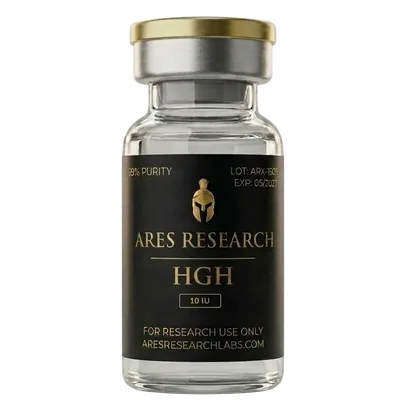
Direct research-grade HGH — Full GH Receptor Activation, Exogenous
Direct HGH bypasses the pituitary entirely, delivering precise exogenous GH receptor stimulation. Best for researchers studying downstream GH receptor biology with precise dosing control. Suppresses endogenous GH through negative feedback and produces non-pulsatile elevation.
CJC-1295 + Ipamorelin — The Standard Secretagogue Stack
The CJC-1295 + Ipamorelin combination is the most documented dual-pathway GH secretagogue approach — preserving pituitary axis negative feedback while producing synergistic GH pulse output through GHRH and ghrelin receptor co-activation. Best for researchers who want pulsatile GH stimulation while maintaining pituitary axis integrity.
Tesamorelin — Clinical History and Visceral Fat Data
Tesamorelin brings FDA-approved clinical history that other secretagogues lack, with the deepest published evidence for visceral fat reduction specifically. Best for researchers who prioritize literature depth and visceral adipose tissue research applications.
HGH Fragment 176-191 — Lipolysis in Isolation
HGH Fragment 176-191 isolates GH's proposed lipolytic domain from its anabolic and insulin-antagonizing effects. Best for researchers specifically studying fat metabolism mechanisms without full GH receptor activation.
Related Research HGH vs Peptide Secretagogues Best HGH Peptide Stack Research Where to Buy HGH USA 2026
Research Use Only. DisclaimerFor laboratory and research use only. Not for human consumption. This content is educational and does not constitute medical advice.
Running the numbers for a protocol? Use the research calculators to convert mg, mL, and syringe units.
Related Research Articles
Peptides for Lean Muscle Research 2026
Lean muscle research peaks in summer alongside weight loss research — researchers studying muscle preservation and growth during summer training cycles create consistent demand for the GH-axis and IGF-1 compound categories. Here's the summer 2026 lean muscle research guide.
Best Peptides for Tanning Research — Summer 2026 Guide
Melanocortin research compounds see their sharpest demand peak in summer months — MT-2 is the top-searched compound in this category by a significant margin. Here's the complete summer guide covering mechanism, sourcing, and verification.
Skin Peptide Stack Research 2026
Skin biology is addressed by several distinct research peptide mechanisms — collagen gene expression, vascularization, GH-axis IGF-1 signaling, and even the rapid skin laxity changes associated with significant weight loss on GLP compounds. Here's the complete picture.
Neutral, moderated research discussion. Laboratory use only.
More compound guides, hubs, and educational research materials.