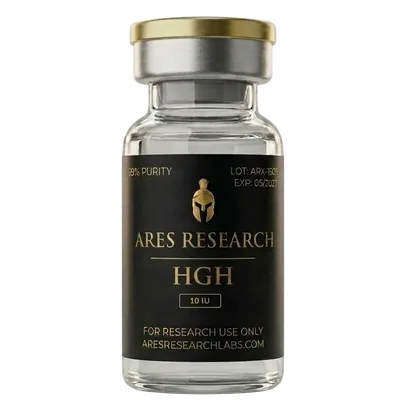
HGH Side Effects & Safety Profile
Systematic review of documented HGH adverse effects, incidence, dose-dependency, and 10–15 year safety registry data. Research use only.
The Dose-Dependency Principle
The single most important principle governing research-grade HGH adverse effects is dose-dependency. Virtually every adverse effect associated with GH administration is more frequent, more severe, and more clinically significant at supraphysiological doses than at physiological replacement doses. The adverse effect profile observed in early aging research using doses of 0.3–1.0 mg/day (approximately 1–3 IU/day) was considerably more burdensome than the profile seen in GH deficiency replacement trials using lower, IGF-1-guided doses. Understanding this dose-dependency is essential for interpreting adverse effect incidence data from different research contexts.
A second important principle: many GH adverse effects are related to the non-pulsatile, continuous GH exposure produced by daily subcutaneous injection rather than to GH itself. Continuous GH receptor stimulation drives sodium retention, fluid redistribution, and insulin antagonism more persistently than the pulsatile physiological GH pattern. This is one reason why peptide-based approaches that restore GH pulsatility produce a considerably cleaner adverse effect profile than equivalent IGF-1 elevations produced by exogenous HGH.
Complete Adverse Effect Profile
| Adverse Effect | Incidence (Replacement Dose) | Incidence (High Dose) | Mechanism | Management | | --- | --- | --- | --- | --- | | Peripheral Oedema / Fluid Retention | 10–20% | 30–50% | GH increases renal sodium reabsorption via IGF-1 activation of sodium-hydrogen exchanger in proximal tubule; total body water increases 1–3 L | Dose reduction; often self-resolving within 2–4 weeks as body adapts; rarely requires diuretics | | Arthralgias (Joint Pain) | 10–20% | 25–35% | Fluid accumulation in joint spaces; possible direct effect of IGF-1 on cartilage and synovial tissue; wrist and knee most common | Dose reduction typically resolves; NSAIDs for symptomatic relief; usually not treatment-limiting at replacement doses | | Myalgias (Muscle Pain) | 5–10% | 15–25% | Rapid fluid redistribution into muscle tissue; possible direct IGF-1 effect on muscle sodium channels | Typically transient (first 2–4 weeks); dose reduction if persistent; warm-up before exercise | | Carpal Tunnel Syndrome | 5–10% | 15–20% | Fluid retention in carpal tunnel compresses median nerve; IGF-1-driven soft tissue hypertrophy contributes at high doses | Dose reduction usually resolves; wrist splinting; rarely requires surgical decompression | | Insulin Resistance / Glucose Intolerance | 5–10% (new T2DM) | 15–25% | GH activates SOCS-1/3 proteins that inhibit IRS-1 phosphorylation, reducing insulin receptor signal transduction in muscle and liver | IGF-1-guided dose titration minimises; fasting glucose monitoring every 3–6 months; metformin if glucose impaired | | Injection Site Reactions | 10–20% | 10–20% | Local tissue reaction to injection; lipohypertrophy with repeated injection at same site | Site rotation mandatory; warming reconstituted solution; using smallest appropriate needle gauge | | Headache | 5–8% | 10–15% | Possible fluid pressure changes intracranially; rarely, benign intracranial hypertension (pseudotumor cerebri) — more common in children | Usually mild and transient; persistent or severe headache requires ophthalmic evaluation to exclude papilloedema | | Gynaecomastia (Males) | <5% | 5–10% | IGF-1 stimulates aromatase activity, increasing conversion of androgens to oestradiol; also direct mammary gland IGF-1R stimulation | Dose reduction; aromatase inhibitor consideration in research protocols; usually reversible | | Acromegalic Features (Chronic High Dose) | Rare at replacement doses | Significant risk at chronic supraphysiological doses | IGF-1-driven bone and cartilage growth: jaw enlargement (prognathism), hand/foot size increase, coarsening of facial features; irreversible with prolonged exposure | Avoid supraphysiological dosing; regular IGF-1 monitoring prevents; features partially reversible if caught early | | Benign Intracranial Hypertension | <1% (adults) | Rare | Increased CSF production or reduced absorption; fluid retention component; more common in paediatric patients and obese adults | GH cessation; papilloedema monitoring; requires urgent ophthalmological assessment if suspected |
Insulin Resistance: The Most Clinically Significant Metabolic Effect
GH's insulin-antagonising effects represent the most metabolically significant adverse consequence of HGH administration, particularly in populations with existing insulin resistance risk. The mechanism is well-characterised: GH activates JAK2, which phosphorylates and activates SOCS-1 (suppressor of cytokine signalling-1) and SOCS-3. These SOCS proteins inhibit insulin receptor substrate-1 (IRS-1) phosphorylation — the primary post-receptor signalling step required for insulin-mediated GLUT4 translocation in skeletal muscle. Reduced IRS-1 signalling decreases insulin-stimulated glucose uptake in muscle by 20–40% at research-relevant GH doses.
In healthy young adults with robust insulin sensitivity, this GH-induced insulin resistance is well-tolerated and partially offset by IGF-1's mild insulin-like glucose-lowering effect. In older adults, those with metabolic syndrome, or those with pre-existing impaired fasting glucose, the same degree of GH-induced insulin resistance can produce clinically significant hyperglycaemia. Long-term GH registry data (KIMS, HypoCCS) shows a modest but real increase in new-onset T2DM of approximately 1–2% per year in GH-replaced patients — substantially lower than early fear suggested, but real and requiring systematic monitoring.
The Cancer Risk Question: Evidence Summary
The theoretical concern that GH/IGF-1 elevation might increase cancer risk — through IGF-1's potent mitogenic effects on multiple cell types — has been extensively examined in long-term GH replacement registries. The most comprehensive data comes from the KIMS registry (>13,000 patients, up to 15-year follow-up) and the HypoCCS registry (>18,000 patients). Both registries consistently show that cancer incidence in GH-replaced AGHD patients is not elevated compared to age-matched population controls when analysed appropriately for lead-time bias and ascertainment differences.
The critical caveat: these registries involve GH replacement at physiological doses guided by IGF-1 monitoring to maintain levels within the normal range. Supraphysiological GH/IGF-1 levels — as may occur with high-dose non-medical GH use — have not been studied in the context of long-term cancer risk in controlled registries, and the theoretical concern about supraphysiological mitogenic signalling remains scientifically valid. GH is absolutely contraindicated in any subject with active or suspected malignancy, and this contraindication is not dose-dependent — even physiological replacement doses are contraindicated with active cancer.
Acromegalic Features: The High-Dose Chronic Risk
Acromegaly — the clinical syndrome of GH excess from a GH-secreting pituitary tumour — provides a natural model for understanding the consequences of chronic supraphysiological GH/IGF-1 exposure. The features of acromegaly develop over years of extreme GH excess: jaw enlargement (prognathism) from mandibular periosteal bone growth; hand and foot enlargement from combined bone and soft tissue hypertrophy; coarsening of facial features; macroglossia; organomegaly (particularly cardiac hypertrophy); sleep apnoea; hypertension; and markedly elevated cardiovascular mortality.
At physiological GH replacement doses — where IGF-1 is maintained within the normal range — these features do not develop. The risk emerges with chronic supraphysiological dosing, where IGF-1 is persistently elevated above the upper normal range. For research protocols, this underscores the critical importance of IGF-1 monitoring: maintaining IGF-1 within the age-appropriate normal range is both the primary efficacy endpoint (ensuring adequate replacement) and the primary safety endpoint (preventing iatrogenic GH excess).
Absolute Contraindications to HGH
#### Active Malignancy
GH is absolutely contraindicated in any subject with active or suspected cancer. IGF-1's mitogenic effects could theoretically promote tumour cell proliferation. This contraindication applies regardless of dose and is not modified by the type of malignancy. #### Benign Intracranial Hypertension
Active or recent benign intracranial hypertension (pseudotumor cerebri) is an absolute contraindication. GH may exacerbate intracranial pressure through fluid retention mechanisms. Resolution of BIH before initiating or resuming GH is required. #### Active Proliferative or Severe Non-Proliferative Diabetic Retinopathy
IGF-1 stimulates retinal neovascularisation and may worsen proliferative diabetic retinopathy. Ophthalmological clearance and retinal stabilisation are required before initiating GH in diabetic subjects with retinal disease. #### Critical Illness (Acute Phase)
High-dose GH in critically ill patients — based on two large RCTs in ICU populations — was associated with increased mortality. GH is contraindicated during acute critical illness. This finding does not apply to standard replacement dosing in AGHD but precludes GH use in acute medical emergencies.
Recommended Monitoring Protocol
| Parameter | Baseline | Month 1–3 | Month 6 | Annually | | --- | --- | --- | --- | --- | | IGF-1 (serum) | ✓ Required | ✓ Dose titration | ✓ Confirm target range | ✓ Maintenance | | Fasting glucose / HbA1c | ✓ Required | — | ✓ | ✓ | | Fasting lipid panel | ✓ Required | — | ✓ | ✓ | | Thyroid function (TSH, FT4) | ✓ Required | — | ✓ | ✓ | | Blood pressure | ✓ | ✓ | ✓ | ✓ | | Body composition (DXA) | ✓ Recommended | — | — | ✓ | | Bone mineral density (DXA) | ✓ Recommended | — | — | Every 2 years | | Clinical symptoms (oedema, arthralgias) | ✓ | ✓ Dose adjustment | ✓ | ✓ |
The Critical Illness Paradox > Two large randomised trials (Takala et al. 1999, published in NEJM) administered high-dose GH (0.1 mg/kg/day — far above replacement doses) to critically ill ICU patients and found significantly increased mortality in the GH-treated groups. This finding — one of the most sobering in GH research history — established a firm contraindication for GH during acute critical illness. The mechanism is proposed to involve GH-driven hyperglycaemia and insulin resistance overwhelming already metabolically stressed patients. This contraindication applies specifically to high-dose GH in acute illness and does not extrapolate to physiological replacement doses in stable AGHD subjects — but it underscores why dose and context are paramount in GH research safety evaluation.
References
- Molitch ME, et al. "Evaluation and treatment of adult growth hormone deficiency." *J Clin Endocrinol Metab*. 2011;96(6):1587–1609.
- Takala J, et al. "Increased mortality associated with growth hormone treatment in critically ill adults." *N Engl J Med*. 1999;341(11):785–792.
- Abs R, et al. "GH deficiency in hypopituitary adults: evidence for central hypothyroidism, central adrenal insufficiency and hypogonadism." *KIMS Investigators Group. Clin Endocrinol (Oxf)*. 1999;50(1):67–75.
- Liu H, et al. "Systematic review: the safety and efficacy of growth hormone in the healthy elderly." *Ann Intern Med*. 2007;146(2):104–115.
- Woodhouse LJ, et al. "The influence of growth hormone status on physical impairments, functional limitations, and health-related quality of life in adults." *Endocr Rev*. 2006;27(3):287–317.
- Sacca L, et al. "Growth hormone and the heart: a review of recent developments." *Clin Endocrinol (Oxf)*. 1994;40(2):261–269.
Running the numbers for a protocol? Use the research calculators to convert mg, mL, and syringe units.
Related Research Articles
Peptides for Lean Muscle Research 2026
Lean muscle research peaks in summer alongside weight loss research — researchers studying muscle preservation and growth during summer training cycles create consistent demand for the GH-axis and IGF-1 compound categories. Here's the summer 2026 lean muscle research guide.
Best Peptides for Tanning Research — Summer 2026 Guide
Melanocortin research compounds see their sharpest demand peak in summer months — MT-2 is the top-searched compound in this category by a significant margin. Here's the complete summer guide covering mechanism, sourcing, and verification.
HGH Research Alternatives 2026 — Secretagogues, Fragments &
Researchers studying the growth hormone axis have distinct options — each with different mechanisms, evidence bases, and research applications. Here's how CJC-1295, Ipamorelin, Tesamorelin, HGH Fragment 176-191, and direct HGH compare across the key research dimensions.
Skin Peptide Stack Research 2026
Skin biology is addressed by several distinct research peptide mechanisms — collagen gene expression, vascularization, GH-axis IGF-1 signaling, and even the rapid skin laxity changes associated with significant weight loss on GLP compounds. Here's the complete picture.
Neutral, moderated research discussion. Laboratory use only.
More compound guides, hubs, and educational research materials.