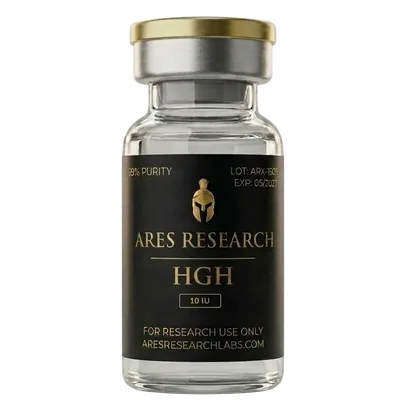
HGH vs Peptide Secretagogues — Two Approaches to GH-Axis
Direct HGH administration and peptide secretagogue stimulation both elevate growth hormone, but through fundamentally different mechanisms with different implications for pituitary axis preservation, pulse pattern, and IGF-1 response research.
Researchers studying the growth hormone axis have two distinct approaches available: administering exogenous recombinant research-grade HGH directly, or stimulating the pituitary to produce and release its own GH through secretagogue compounds. These are not interchangeable research designs — they answer different questions and produce different downstream profiles.
Direct HGH Administration
Recombinant human growth hormone administration bypasses the hypothalamic-pituitary axis entirely, introducing exogenous GH into circulation regardless of what the pituitary is doing. This approach provides precise, dose-controlled GH exposure and allows researchers to study downstream IGF-1 response and tissue effects with high reproducibility. The trade-off is that it suppresses endogenous GH secretion through negative feedback and produces sustained, non-pulsatile GH elevation rather than the natural pulsatile pattern that physiologic secretion follows.
Peptide Secretagogue Stimulation
GHRH analogs like CJC-1295, Tesamorelin, and Sermorelin work upstream — stimulating the pituitary to produce and release its own GH in response to GHRH receptor activation. GHRPs like Ipamorelin add a second pathway via ghrelin receptor activation. These approaches preserve the pituitary's negative feedback regulation and produce pulsatile rather than sustained GH elevation, more closely mimicking the physiologic pattern of endogenous secretion.
What the Difference Means for Research Design
- Factor: Mechanism — Direct [HGH](/research/hubs/hgh): Exogenous GH replacement — Peptide Secretagogues: Pituitary stimulation upstream
- Factor: Pituitary Axis — Direct HGH: Suppressed by negative feedback — Peptide Secretagogues: Preserved with negative feedback intact
- Factor: GH Pattern — Direct HGH: Sustained, non-pulsatile — Peptide Secretagogues: Pulsatile, more physiologic
- Factor: IGF-1 Research — Direct HGH: Direct, dose-predictable elevation — Peptide Secretagogues: Indirect, pituitary-mediated elevation
- Factor: Research Use Case — Direct HGH: Downstream effect studies — Peptide Secretagogues: Pituitary axis preservation studies
Research Use Only. DisclaimerFor laboratory and research use only. Not for human consumption. This content is educational and does not constitute medical advice.
Running the numbers for a protocol? Use the research calculators to convert mg, mL, and syringe units.
Related Research Articles
Peptides for Lean Muscle Research 2026
Lean muscle research peaks in summer alongside weight loss research — researchers studying muscle preservation and growth during summer training cycles create consistent demand for the GH-axis and IGF-1 compound categories. Here's the summer 2026 lean muscle research guide.
Best Peptides for Tanning Research — Summer 2026 Guide
Melanocortin research compounds see their sharpest demand peak in summer months — MT-2 is the top-searched compound in this category by a significant margin. Here's the complete summer guide covering mechanism, sourcing, and verification.
Tesamorelin for Visceral Fat Research 2026
Tesamorelin's FDA-approved lipodystrophy history makes it unique among research peptides for visceral fat research — it carries a published clinical evidence base for visceral adipose tissue reduction that no other GHRH analog can match. Here's the research case and where to source it.
MT-2 Tanning Peptide Research — Summer 2026 Guide & Where to
MT-2 is the most searched melanocortin research compound in summer months — its MC1R-mediated pigmentation mechanism and the demand for verified domestic sourcing both peak during July and August. Here's the complete research and sourcing guide.
HGH Research Alternatives 2026 — Secretagogues, Fragments &
Researchers studying the growth hormone axis have distinct options — each with different mechanisms, evidence bases, and research applications. Here's how CJC-1295, Ipamorelin, Tesamorelin, HGH Fragment 176-191, and direct HGH compare across the key research dimensions.
Skin Peptide Stack Research 2026
Skin biology is addressed by several distinct research peptide mechanisms — collagen gene expression, vascularization, GH-axis IGF-1 signaling, and even the rapid skin laxity changes associated with significant weight loss on GLP compounds. Here's the complete picture.
Neutral, moderated research discussion. Laboratory use only.
More compound guides, hubs, and educational research materials.