Research Peptides FAQ 2026 — The 20 Most Asked Questions,
The most common questions new and experienced researchers ask before and after sourcing — covering verification, storage, reconstitution, catalog selection, and what to do when documentation raises questions.
Sourcing and Verification
Q: What is a COA and why does it matter? A Certificate of Analysis is a document from a third-party laboratory confirming a compound's identity and purity. It is the primary evidence that what you ordered is what's in the vial. Our full COA reading guide explains exactly what to look for.
Q: Is HPLC sufficient without [mass spectrometry](/standards/purity-verification)? No. HPLC confirms purity of whatever is in the sample but cannot confirm what compound it is. Mass spectrometry confirms identity. Both are required for a complete COA.
Q: What does "research grade" actually mean? There is no regulatory definition. In practice, it should mean HPLC purity above 98%, mass spectrometry identity confirmation, domestic synthesis, and batch-specific documentation. Most suppliers don't meet all four standards.
Q: Is "ships from USA" the same as domestically synthesized? No. Many suppliers import raw material from overseas manufacturers and repackage domestically. Domestic shipping address is not evidence of domestic synthesis.
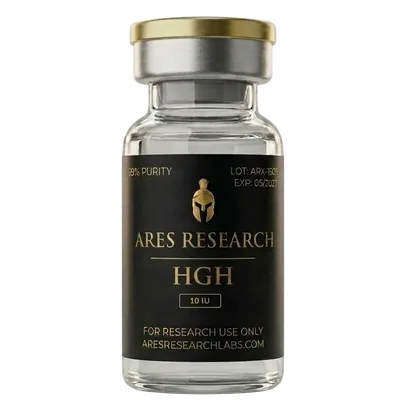
Q: How do I verify a [supplier](/collective/supplier-sourcing) is a real business? Search the business name in the relevant state's business entity database. LLC registration is publicly verifiable. Ares Research operates as Ares Collective LLC, New Hampshire registered.
Storage and Handling
Q: How should lyophilized peptides be stored? Lyophilized (freeze-dried) peptides are stable at -20°C for extended periods. Room temperature storage for short periods is acceptable for most peptides but not ideal. Avoid repeated freeze-thaw cycles. Our storage guide covers compound-specific requirements.
Q: How long do reconstituted peptides last? Most reconstituted peptides in bacteriostatic water are stable for 4-6 weeks refrigerated (2-8°C). Sterile water without benzyl alcohol degrades faster. Always use bacteriostatic water for reconstitution if the solution won't be used immediately.
Q: Does [GHK-Cu](/research/hubs/ghk-cu) require different storage than other peptides? Yes — copper-coordinated peptides can be more sensitive to oxidation than standard peptides. Keep GHK-Cu protected from light and reconstitute with bacteriostatic water. Discard if the solution changes color significantly after reconstitution.
Reconstitution
Q: What is bacteriostatic water and why is it used? Bacteriostatic water contains 0.9% benzyl alcohol as a preservative, allowing the same vial to be accessed multiple times without introducing bacterial contamination. Our full reconstitution guide covers volumes and technique.
Q: Can I mix multiple peptides in the same vial after reconstitution? Some combinations are compatible in solution, some are not — stability depends on pH, ionic interactions between compounds, and concentration. Research each combination specifically before mixing. When in doubt, keep compounds in separate vials.
Catalog Selection
Q: What's the difference between [Retatrutide](/research/hubs/retatrutide), [Tirzepatide](/catalog/ares-cut-2), and Semaglutide? Receptor count. Semaglutide is GLP-1 only. Tirzepatide adds GIP receptor. Retatrutide adds GIP and glucagon receptor. More receptors means more mechanistic complexity and, in trials, larger weight loss signals. Full comparison at our class comparison guide.
Q: What's the difference between CJC-1295 with DAC and without DAC? Half-life — days vs hours. CJC-1295 with DAC binds albumin irreversibly, extending duration dramatically. Mod GRF 1-29 (without DAC) has a short half-life requiring more frequent administration. These are different research tools. See our CJC-1295 guide.
Q: Why is BPC-157 almost always paired with TB-500? Complementary mechanisms — BPC-157's angiogenesis and NO pathway alongside TB-500's actin regulation cover different aspects of tissue repair simultaneously. See our BPC + TB stack guide.
Q: What is the Ares One app? Ares One is a research tracking and AI assistant application built around the Ares Research compound catalog — for protocol management, reminders, and compound-specific research queries. Free, Pro, and Elite tiers available.
Deep Dive Guides How to Read a Peptide COA Reconstitution Complete Guide Storage Complete Guide How to Choose a Supplier
Research Use Only. DisclaimerFor laboratory and research use only. Not for human consumption. This content is educational and does not constitute medical advice.
<!-- AUTO_RELATED_RESEARCH --> ## Related Research
Related Research Articles
Hair Loss Research Peptides 2026
Androgenetic alopecia research spans androgen receptor antagonism, follicle gene expression modulation, and broader growth factor signaling — three distinct mechanistic approaches represented across the research catalog that address different aspects of hair follicle biology.
Research Peptide Vial Sizes Explained 2026
Vial sizing decisions affect reconstitution math, storage duration requirements, and cost efficiency simultaneously. Understanding common vial sizes and how to match them to your specific research protocol prevents both waste and mid-protocol stockouts.
Peptide Bioavailability Research Guide 2026
The subcutaneous injection standard for research peptides isn't arbitrary — it reflects the bioavailability physics of peptide compounds that oral and most other routes simply cannot overcome without molecular engineering. Here's the science and the exceptions.
Peptide Research Considerations for Women 2026
Most research peptide literature is conducted in male-dominant study populations, which creates meaningful gaps in female-specific data. Here's what the available research shows about hormonal context effects on GLP-class, GH-axis, and recovery peptide findings.
Peptide Dosing Frequency Research Guide 2026
Dosing frequency isn't an arbitrary protocol variable — it's determined by half-life and the specific receptor occupancy profile the research design requires. Getting this right is the difference between a protocol that tests the intended mechanism and one that tests something else entirely.
Neutral, moderated research discussion. Laboratory use only.
More compound guides, hubs, and educational research materials.