AOD-9604 Research Hub — Modified hGH Fragment & Lipolysis Studies
AOD-9604 is a modified C-terminal fragment of human growth hormone (residues 176-191) developed to isolate the lipolytic portion of the GH molecule from its growth-promoting and glucose-axis effects. This hub aggregates the comparative GH-fragment literature.
What this hub covers
- Modified hGH fragment 176-191 structure
- Lipolytic signalling without IGF-1 induction
- Comparison to full-length somatropin
- Reconstitution and storage
AOD-9604 research articles
All research →AOD-9604 vs Semaglutide — Research Comparison (2026)
AOD-9604 vs semaglutide for body-composition research: lipolysis-targeted GH fragment vs GLP-1 receptor agonist.
Read article →AOD-9604 Research Overview
AOD-9604 is a stabilised synthetic analogue of the C-terminal lipolytic domain of human growth hormone (residues 176–191) — engineered to selectively stimulate fat metabolism and inhibit lipogenesis without the insulin resistance, IGF-1 elevation, or growth-promoting effects of full-length HGH.
Read article →AOD-9604 vs Tesofensine: Adipose Research Comparison
Compare AOD-9604 (HGH fragment) and Tesofensine (triple monoamine reuptake inhibitor) in adipose and metabolic research.
Read article →Related research hubs
Researchers studying AOD-9604 commonly cross-reference these compounds.
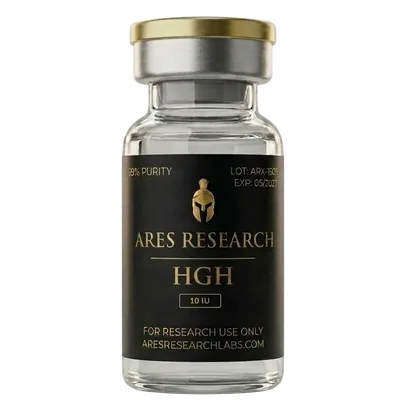
Recombinant human growth hormone (somatropin) is one of the most extensively studied endocrine compounds in the published literature. This hub aggregates Ares Research's HGH reference material — receptor signalling, dose-response, body composition, longevity, and head-to-head comparisons with peptide GH-axis modulators.
Explore hub →Tesamorelin is a synthetic 44-amino-acid analog of growth hormone releasing hormone (GHRH) with a stabilising trans-3-hexenoyl modification at the N-terminus. It is one of the most thoroughly characterised GHRH analogues in the clinical literature, particularly for studies of visceral adipose tissue and the GH/IGF-1 axis.
Explore hub →AOD-9604 research FAQ
- What is AOD-9604?
- AOD-9604 is a synthetic, slightly modified analogue of the C-terminal 16 amino acids of human growth hormone, isolated for research into the lipolytic activity of the GH molecule.
- How does AOD-9604 differ from HGH?
- Unlike full-length somatropin, AOD-9604 does not appreciably stimulate IGF-1 production or impact insulin sensitivity in published models — it is studied specifically for the lipolytic fragment activity.
All content on this hub is provided strictly for laboratory research purposes. Compounds listed are not for human or veterinary consumption. See our research-use disclosure for full terms.