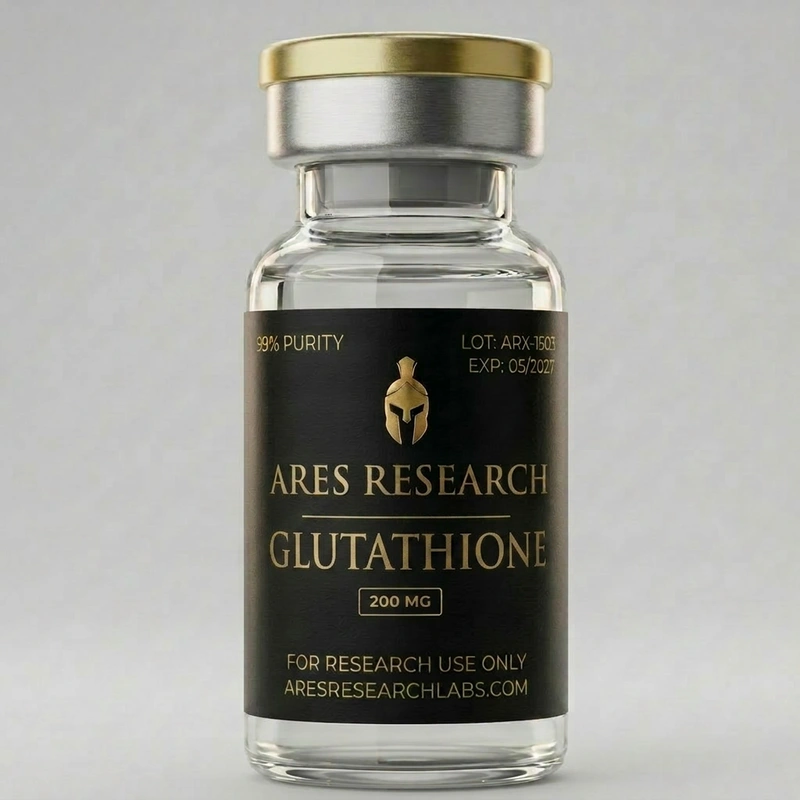
Glutathione
Documentation & standards
- How to Read a Peptide Certificate of Analysis (COA)
- Peptide Storage and Handling: Temperature, Light and Stability
- Research-Use-Only Compliance: What the Label Obligates

Endogenous glutamate-cysteine-glycine tripeptide studied in GSH/GSSG redox, oxidative-stress, and cellular conjugation research models.
Mix and match any items — discount applies automatically at checkout.
Earn 39 loyalty points on this purchase · 100 pts = $5 off
Create a Research Account to unlock full batch data, COAs, and priority releases.
Intended strictly for controlled laboratory receptor and pathway research.
What is Glutathione (GSH)?
Glutathione, commonly abbreviated GSH, is an endogenous tripeptide formed from glutamate, cysteine, and glycine. Its cysteine thiol enables reversible electron transfer, making the reduced GSH and oxidized GSSG pair a primary intracellular redox buffer measured in cellular research.
Laboratory studies examine glutathione-peroxidase reactions that convert peroxides while oxidizing GSH to GSSG, glutathione-reductase recycling of GSSG, and glutathione S-transferase (GST) conjugation of electrophilic compounds. Researchers also measure GSH:GSSG ratios, thiol availability, reactive-oxygen-species markers, and cellular processing of xenobiotic or metabolic by-products.
These descriptions concern biochemical pathways and controlled research endpoints only. The catalog material is not represented for medical, therapeutic, or human use.
Glutathione COA lookup and general verification
No Glutathione-specific third-party report is currently represented as being on file. Each vial carries a batch identifier researchers can use to check what analytical documentation is available through the public lookup. The transparency page explains the general identity, purity, and documentation framework; those standards are not presented as a result for a specific Glutathione batch.
Glutathione research material specifications
| Compound | Glutathione (GSH; γ-glutamyl-cysteinyl-glycine) |
|---|---|
| Structure | Endogenous tripeptide composed of glutamate, cysteine, and glycine |
| Class | Intracellular antioxidant and redox-system research material |
| Purity specification | ≥99% |
| Physical form | Lyophilized powder in a sealed glass vial |
| Available vial sizes | 500 mg and 1500 mg |
| Research distinction | GSH/GSSG redox balance, oxidative-stress, and cellular conjugation endpoints |
| Testing | Batch documentation available through the public lookup when released |
| Storage | Refrigerated, dry, and protected from light; follow batch documentation |
| Origin | Shipped domestically from the USA with tracked delivery |
| Intended scope | Controlled laboratory research only — not for human or veterinary use |
Glutathione research questions
+What is glutathione (GSH)?
Glutathione is an endogenous tripeptide composed of glutamate, cysteine, and glycine. Reduced glutathione (GSH) and oxidized glutathione (GSSG) form a redox pair widely measured in controlled cellular research. This material is supplied strictly for laboratory research — not for human or veterinary use.
+What is glutathione studied for in laboratory research?
Laboratory studies use glutathione to examine intracellular redox balance, oxidative-stress markers, glutathione-peroxidase reactions, glutathione S-transferase conjugation, and cellular processing of reactive compounds. These are experimental endpoints only; no medical or human-use outcome is described or implied.
+How is glutathione research material tested?
Batch documentation may include analytical identity and purity checks performed against the stated specification. The batch lookup shows documentation currently available for a batch, while the transparency page explains the general verification framework. General standards are not presented as a Glutathione-specific result.
+Is a Glutathione-specific COA on file?
No Glutathione-specific third-party report is currently represented as being on file. Researchers can search the public COA lookup for available batch documentation and review the transparency page for the general identity, purity, and documentation process.
+What purity specification applies to Glutathione?
The listed purity specification is ≥99%. Researchers should use the batch identifier on the vial to check what analytical documentation is available for that specific material rather than treating a general standard as a batch result.
+What vial sizes are available?
Glutathione is supplied as lyophilized research material in sealed 500 mg and 1500 mg vials. Available formats and current offers are shown on this page.
+How should sealed Glutathione be stored, and how does it ship?
Keep the sealed lyophilized vial refrigerated, dry, and protected from light, following its batch documentation. Orders ship domestically from the USA with tracked delivery. The material is intended strictly for controlled laboratory research.
Read the Glutathione research
Researcher Reviews
Sign in with the account that placed your order to leave a verified review.
Ask the Lab
No public questions yet — be the first to ask.