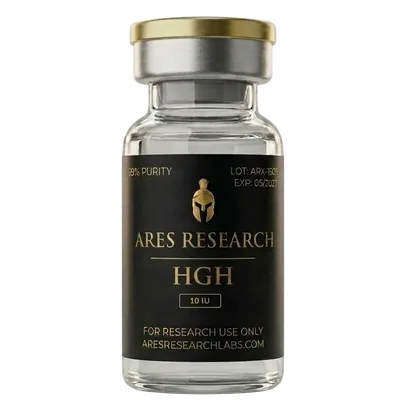
CJC-1295 Safety Profile and Limitations
CJC-1295 Safety Profile and Limitations: research-context overview for laboratory reference at Ares Research.
CJC-1295 is a synthetic tetrasubstituted 29-amino acid peptide analogue of growth hormone-releasing hormone (GHRH) designed to stimulate the secretion of endogenous growth hormone. While extensively studied for its ability to enhance plasma growth hormone (GH) levels and insulin-like growth factor 1 (IGF-1), understanding the safety parameters and pharmacological limitations of this compound is essential for valid laboratory experimentation.
Mechanism of Action and Secretagogue Activity
CJC-1295 functions as a GHRH mimetic, binding to the GHRH receptors on the somatotropic cells of the anterior pituitary gland. Unlike endogenous GHRH, which has a half-life of less than seven minutes, CJC-1295 was engineered to resist rapid enzymatic degradation. By substituting four critical amino acids in the peptide chain, researchers significantly improved the compound’s stability against dipeptidyl peptidase-IV (DPP-IV) cleavage.
Crucially, modern laboratory research often distinguishes between "CJC-1295 DAC" (Drug Affinity Complex) and "CJC-1295 No DAC" (also known as Mod GRF 1-29). The DAC version contains a maleimidopropionic acid group that binds covalently to serum albumin, extending the half-life to several days. In contrast, the No DAC version has a half-life of approximately 30 minutes, more closely mimicking the natural pulsatile nature of GH release. When utilized in research alongside GHS compounds like /catalog/ipamorelin, CJC-1295 demonstrates synergistic effects on GH amplitude.
Safety Profile in Research Contexts
Current literature suggests that CJC-1295 maintains a relatively high safety profile within controlled laboratory environments. Initial clinical trials involving growth hormone deficiency models indicated that the compound was generally well-tolerated at varying dosages. The most frequently documented physiological responses in animal models include transient flushing, localized erythema at the injection site, and minor fluctuations in blood glucose levels.
However, researchers must remain cognizant of the "GH bleed" phenomenon associated specifically with the DAC-variant of CJC-1295. Because the DAC variant provides continuous stimulation of the pituitary, it bypasses the body’s natural negative feedback loop, which may lead to chronically elevated GH levels. Persistent elevation can result in acromegalic-like symptoms, including soft tissue edema and joint discomfort, highlighting the necessity of strict protocol adherence in experimental design. For studies requiring more refined control over GH pulses, researchers often pivot to short-acting analogues or combine them with /catalog/bpc-157 for broader tissue-specific investigations.
Biological Limitations and Feedback Inhibition
Despite its efficacy, CJC-1295 is subject to the body’s homeostatic regulatory mechanisms. One primary limitation is the activation of the somatostatin-mediated feedback loop. Somatostatin, or growth hormone-inhibiting hormone (GHIH), is released by the hypothalamus in response to rising GH and IGF-1 levels. When somatostatin levels are high, the pituitary’s responsiveness to CJC-1295 decreases, potentially resulting in a plateau effect where further dosage increases fail to yield proportional GH secretion.
Furthermore, CJC-1295 does not exhibit the same lipolytic potency as direct /catalog/hgh fragments because it relies on the pituitary’s capacity to synthesize and release its own stores. If the somatotrophs are exhausted or if there is underlying pituitary dysfunction, the efficacy of CJC-1295 is significantly compromised. This makes the compound less effective in older subjects or pathological models where pituitary reserve is diminished.
Pharmacokinetics and Reconstitution Protocols
For laboratory applications, CJC-1295 is typically supplied as a lyophilized (freeze-dried) powder to ensure structural integrity and prevent deamidation. Reconstitution must be performed using Bacteriostatic Water (0.9% benzyl alcohol) or sterile saline, depending on the required acidity and intended storage duration.
Once reconstituted, the peptide is highly sensitive to temperature and mechanical stress. Research indicates that CJC-1295 should be stored at 2°C to 8°C and used within a short window to prevent degradation. Vigorous agitation of the vial can cause the peptide to denature, rendering the research data invalid. Proper handling is paramount when observing long-term changes in IGF-1 markers, as degraded peptides may produce sub-optimal secretagogue responses.
Comparative Efficacy and Synergistic Research
In comparative studies, CJC-1295 (Mod GRF 1-29) is often evaluated against other GHRH analogues like Tesamorelin. While Tesamorelin is specifically recognized for its efficacy in reducing visceral adipose tissue, CJC-1295 is frequently preferred in broader musculoskeletal research due to its cost-effectiveness and well-documented IGF-1 elevating properties.
The combination of CJC-1295 with Growth Hormone Secretagogues (GHS) that act on the ghrelin receptor is a common area of study. This "dual-pathway" approach—stimulating the GHRH receptor while simultaneously inhibiting somatostatin via secretagogues—results in a significantly larger GH pulse than either compound used in isolation. This synergy allows researchers to achieve high GH peaks while using lower concentrations of individual peptides, potentially minimizing the risk of receptor desensitization.
Research-Based Observations on IGF-1 Elevation
The primary marker for CJC-1295 efficacy in longitudinal studies is the elevation of insulin-like growth factor 1 (IGF-1). Unlike GH, which pulses and clears rapidly from the bloodstream, IGF-1 levels remain relatively stable throughout the day. Chronic administration of CJC-1295 has been shown to increase mean IGF-1 levels by 1.5 to 3 times the baseline in various animal models.
However, excessive IGF-1 elevation can lead to insulin resistance. Research protocols must often include glucose monitoring to ensure that the increased GH/IGF-1 activity does not negatively impact carbohydrate metabolism. These metabolic shifts represent a significant limitation in long-term study designs, requiring researchers to implement "wash-out" periods to allow the pituitary and metabolic pathways to reset.
Frequently Asked Questions
Q: What is the primary difference between CJC-1295 with DAC and without DAC? The primary difference lies in the half-life and the duration of pituitary stimulation. CJC-1295 with DAC (Drug Affinity Complex) binds to albumin and remains active in the system for up to 8 days, whereas the version without DAC (Mod GRF 1-29) has a 30-minute half-life, allowing for more controlled, pulsatile growth hormone release.
Q: How should CJC-1295 be stored in a laboratory setting? Lyophilized CJC-1295 should be stored in a freezer at -20°C for long-term stability. Once reconstituted, the solution should be refrigerated at 2°C to 8°C and protected from light. It is recommended to use the reconstituted peptide within 14 to 28 days to ensure maximum potency.
Q: Does CJC-1295 administration affect the natural production of growth hormone? CJC-1295 stimulates the release of GH rather than replacing it; however, prolonged use of the DAC version can lead to a condition known as "GH bleed," where the natural pulsatile rhythms are replaced by a constant trickle. This can eventually lead to a decrease in pituitary sensitivity via negative feedback loops.
Q: Why is CJC-1295 often researched alongside GHRPs or [Ipamorelin](/research/hubs/ipamorelin)? CJC-1295 and GHRP-derived secretagogues work on different receptors (GHRH receptor vs. Ghrelin/GHS receptor). When used together, they provide a synergistic effect that results in a more significant GH pulse by simultaneously stimulating the pituitary and suppressing somatostatin.
Research Use Only. This content is intended for laboratory and research purposes only. Not for human consumption, diagnosis, or treatment.
Related Research Articles
Peptides for Lean Muscle Research 2026
Lean muscle research peaks in summer alongside weight loss research — researchers studying muscle preservation and growth during summer training cycles create consistent demand for the GH-axis and IGF-1 compound categories. Here's the summer 2026 lean muscle research guide.
Best Peptides for Tanning Research — Summer 2026 Guide
Melanocortin research compounds see their sharpest demand peak in summer months — MT-2 is the top-searched compound in this category by a significant margin. Here's the complete summer guide covering mechanism, sourcing, and verification.
Tesamorelin for Visceral Fat Research 2026
Tesamorelin's FDA-approved lipodystrophy history makes it unique among research peptides for visceral fat research — it carries a published clinical evidence base for visceral adipose tissue reduction that no other GHRH analog can match. Here's the research case and where to source it.
MT-2 Tanning Peptide Research — Summer 2026 Guide & Where to
MT-2 is the most searched melanocortin research compound in summer months — its MC1R-mediated pigmentation mechanism and the demand for verified domestic sourcing both peak during July and August. Here's the complete research and sourcing guide.
HGH Research Alternatives 2026 — Secretagogues, Fragments &
Researchers studying the growth hormone axis have distinct options — each with different mechanisms, evidence bases, and research applications. Here's how CJC-1295, Ipamorelin, Tesamorelin, HGH Fragment 176-191, and direct HGH compare across the key research dimensions.
Skin Peptide Stack Research 2026
Skin biology is addressed by several distinct research peptide mechanisms — collagen gene expression, vascularization, GH-axis IGF-1 signaling, and even the rapid skin laxity changes associated with significant weight loss on GLP compounds. Here's the complete picture.
Neutral, moderated research discussion. Laboratory use only.
More compound guides, hubs, and educational research materials.