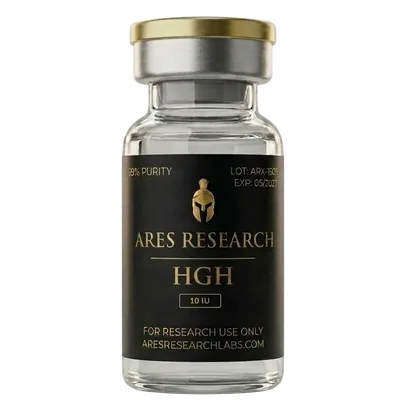
HGH (Somatropin) Research Overview
Recombinant human growth hormone (somatropin) is a 191-amino acid single-chain polypeptide identical to pituitary-derived GH — the definitive reference compound for GH axis research, with the most extensive clinical evidence base of any GH-related intervention and a fully characterised receptor signalling mechanism spanning JAK2/STAT5, MAPK, and PI3K pathways.
Background: From Pituitary Extract to Recombinant Protein
Human growth hormone (hGH) was first isolated from human pituitary glands in 1956 by Choh Hao Li and Herbert Evans, and therapeutic pituitary-derived GH became available for treating GH deficiency in children in the early 1960s. This source of GH — cadaveric human pituitary glands — was discontinued in 1985 following the identification of Creutzfeldt-Jakob disease transmission in recipients. Recombinant DNA technology enabled the production of recombinant hGH (rhGH, somatropin) from bacterial expression systems, first approved by the FDA in 1985 (Protropin) and subsequently from mammalian cell systems with identical 191-amino acid sequence and glycosylation pattern to pituitary GH.
Today, somatropin is produced by multiple manufacturers as an FDA-approved therapeutic protein for a range of GH deficiency and growth disorder indications. It represents the gold standard reference compound for GH axis research — the direct comparator against which all GH secretagogues, GHRH analogues, and GHRPs are evaluated.
- Molecular Weight: 22,124 Da (191 amino acids)
- Structure: Single-chain polypeptide; 2 disulfide bonds
- Receptor: GH receptor (GHR) — class I cytokine receptor superfamily
- Primary Signalling: JAK2/STAT5, MAPK/ERK, PI3K/AKT
- Plasma Half-life: ~15–20 minutes (endogenous pulse); 3–5 hours (SC injection)
- Primary Anabolic Mediator: Hepatic IGF-1 (systemic); local tissue IGF-1
GH Receptor Signalling: The Molecular Cascade
Growth hormone exerts its biological effects by binding the growth hormone receptor (GHR) — a single-pass transmembrane receptor of the class I cytokine receptor superfamily expressed in liver, adipose tissue, skeletal muscle, bone, and numerous other tissues. GH binding causes dimerisation of two GHR molecules (one GH molecule binds two GHR units sequentially via distinct receptor binding sites), which activates the receptor-associated Janus kinase 2 (JAK2) through transphosphorylation.
Activated JAK2 phosphorylates tyrosine residues on the GHR cytoplasmic tail, creating docking sites for Signal Transducer and Activator of Transcription 5 (STAT5). STAT5a and STAT5b are recruited, phosphorylated by JAK2, dimerised, and translocated to the nucleus — where they drive transcription of GH-responsive genes including IGF-1, IGFBP-3, acid-labile subunit (ALS), and multiple metabolic enzymes. The STAT5b isoform is particularly important for GH-mediated IGF-1 production; STAT5b knockout mice exhibit profound GH resistance with low IGF-1 despite normal GH secretion.
MAPK and PI3K Parallel Pathways
In addition to the canonical JAK2/STAT5 pathway, GHR activation recruits SH2 domain–containing proteins (Shc, Grb2) that initiate RAS/MAPK/ERK signalling — driving cell proliferation, differentiation, and gene expression responses not captured by STAT5 alone. The PI3K/AKT pathway is also activated downstream of GHR, mediating GH's insulin-sensitising effects in fat cells and protein synthesis stimulation in muscle. These parallel signalling arms explain how GH can simultaneously promote anabolism (STAT5/IGF-1), proliferation (MAPK), and metabolic substrate shifting (PI3K/AKT) across different target tissues.
GH-Dependent vs GH-Independent Effects
GH's biological effects are partly direct (acting on GHR in peripheral tissues without IGF-1 mediation) and partly indirect (mediated through IGF-1 produced in response to GH). Dissecting these pathways has been a central challenge in GH research. Studies in subjects with isolated IGF-1 deficiency (Laron syndrome — GH resistance due to GHR mutations) demonstrate that some GH actions (lipolysis, insulin antagonism) are direct, while others (linear growth, protein synthesis) require intact IGF-1 signalling. This dual direct/indirect mechanism architecture means that simply measuring IGF-1 does not fully capture GH's biological activity.
Body Composition Research
Lean Mass and Fat Mass
The most extensively documented effects of somatropin in human research concern body composition. Across multiple randomised controlled trials in GH-deficient adults, somatropin produces consistent increases in lean body mass (typically 2–5 kg over 6 months) and decreases in fat mass (particularly visceral adipose tissue, 10–20%), with modest effects on bone mineral density. These effects are dose-dependent and correlated with achieved IGF-1 levels. The mechanism involves GH-mediated lipolysis in adipocytes (stimulating hormone-sensitive lipase and suppressing lipoprotein lipase) and anabolic IGF-1 effects in muscle and bone.
Metabolic Effects
GH has complex, counter-regulatory effects on glucose metabolism that must be carefully considered in research protocols. At physiological pulsatile doses, GH promotes a mild post-pulse insulin resistance through suppression of insulin receptor substrate (IRS) signalling, mobilises fatty acids from adipose tissue as an energy substrate, and indirectly improves insulin sensitivity via IGF-1's insulin-like signalling in muscle and fat. At supraphysiological or sustained (non-pulsatile) doses, these effects become pathological — producing frank insulin resistance and hyperinsulinaemia, particularly in subjects with metabolic risk factors. Glucose monitoring is essential in somatropin research protocols.
HGH vs Peptide-Based GH Axis Approaches
- GH Pulse Pattern
- Exogenous research-grade HGH (Somatropin): Tonic, non-pulsatile
- GHRH Analogues (e.g. Mod GRF 1-29): Pulsatile (preserves endogenous rhythm)
- GHRPs (e.g. Ipamorelin): Pulsatile (discrete burst)
- Endogenous GH Suppression
- Exogenous HGH (Somatropin): Yes — negative feedback suppresses pituitary GH
- GHRH Analogues: No — works through pituitary
- GHRPs: No — amplifies pituitary output
- IGF-1 Elevation
- Exogenous HGH (Somatropin): Direct, dose-dependent, sustained
- GHRH Analogues: Indirect, pulsatile, physiological range
- GHRPs: Indirect, pulsatile
- Regulatory Oversight
- Exogenous HGH (Somatropin): Schedule III controlled substance (US)
- GHRH Analogues: Unscheduled research compound
- GHRPs: Unscheduled research compound
- Receptor Desensitisation
- Exogenous HGH (Somatropin): GHR downregulation with chronic use
- GHRH Analogues: Minimal (preserves GHRH-R sensitivity)
- GHRPs: Minimal (Ipamorelin); moderate (Hexarelin)
- Clinical Evidence Base
- Exogenous HGH (Somatropin): Extensive — decades of RCT data
- GHRH Analogues: Moderate (Tesamorelin Phase III)
- GHRPs: Limited human data
- Physiological Authenticity
- Exogenous HGH (Somatropin): Low — bypasses regulatory axis
- GHRH Analogues: High — stimulates axis physiologically
- GHRPs: High — amplifies physiological output
Key Research Distinction: The fundamental pharmacological difference between exogenous somatropin and peptide-based GH axis approaches is pulsatility and axis preservation. Exogenous GH produces continuous, non-physiological receptor exposure that suppresses endogenous GH production through feedback inhibition. Peptide approaches (GHRH analogues, GHRPs) work through the body's own pituitary, preserving the oscillating somatostatin/GHRH dynamic that maintains receptor sensitivity and regulatory control. For research designs requiring physiological authenticity in GH axis modelling, peptide approaches are methodologically superior. For research requiring defined, controllable GH concentrations, somatropin provides a precision that peptide approaches cannot match.
FDA-Approved Indications for Somatropin
Somatropin is FDA-approved for: paediatric growth hormone deficiency (GHD); adult growth hormone deficiency; short stature associated with Turner syndrome, Prader-Willi syndrome, Noonan syndrome, SHOX deficiency, and chronic renal insufficiency; short stature for gestational age (SGA); idiopathic short stature; and HIV-associated wasting or cachexia (Serostim). Each indication has specific dosing criteria, IGF-1 monitoring requirements, and contraindications (active malignancy, diabetic retinopathy, acute critical illness) that are documented in the respective product labelling.
Adverse Effect Profile in Research Contexts
The adverse effects of somatropin at research-relevant doses are well-characterised from extensive clinical trial data. The most common are: oedema and fluid retention (sodium retention mediated by IGF-1); arthralgias and myalgias (particularly at initiation); carpal tunnel syndrome; insulin resistance and hyperglycaemia (dose-dependent); and injection site reactions. Serious concerns with chronic supraphysiological use include: IGF-1–mediated cellular proliferation (theoretical tumour promotion risk — somatropin is contraindicated in active malignancy); acromegalic features (jaw enlargement, macroglossia, increased hand/foot size) with extreme chronic overdosage; and pituitary GH suppression on discontinuation after prolonged use.
Research Use Only — Disclaimer: Somatropin (recombinant human growth hormone) is a Schedule III controlled substance in the United States and a prescription pharmaceutical in all major jurisdictions. Its possession and use outside licensed medical or research contexts is illegal in most jurisdictions. This document is prepared for educational and research reference purposes only. This content does not constitute medical advice, treatment recommendation, or endorsement of non-prescribed use. Researchers must comply with all applicable institutional, DEA, FDA, and jurisdictional regulations.
References
- Molitch ME, et al. "Evaluation and treatment of adult growth hormone deficiency." J Clin Endocrinol Metab. 2011;96(6):1587–1609.
- Janssen YJ, et al. "Changes in muscle mass, fat mass, and bone mineral density in growth hormone-deficient adults." Metab Clin Exp. 1999;48(3):384–388.
- Brooks AJ, Waters MJ. "The growth hormone receptor: mechanism of activation and clinical implications." Nat Rev Endocrinol. 2010;6(9):515–525.
- Vance ML, Mauras N. "Growth hormone therapy in adults and children." N Engl J Med. 1999;341(16):1206–1216.
- Rudman D, et al. "Effects of human growth hormone in men over 60 years old." N Engl J Med. 1990;323(1):1–6.
- Waxman DJ, O'Connor C. "Growth hormone regulation of sex-dependent liver gene expression." Mol Endocrinol. 2006;20(11):2613–2629.
Running the numbers for a protocol? Use the research calculators to convert mg, mL, and syringe units.
Related Research Articles
Peptides for Lean Muscle Research 2026
Lean muscle research peaks in summer alongside weight loss research — researchers studying muscle preservation and growth during summer training cycles create consistent demand for the GH-axis and IGF-1 compound categories. Here's the summer 2026 lean muscle research guide.
Best Peptides for Tanning Research — Summer 2026 Guide
Melanocortin research compounds see their sharpest demand peak in summer months — MT-2 is the top-searched compound in this category by a significant margin. Here's the complete summer guide covering mechanism, sourcing, and verification.
HGH Research Alternatives 2026 — Secretagogues, Fragments &
Researchers studying the growth hormone axis have distinct options — each with different mechanisms, evidence bases, and research applications. Here's how CJC-1295, Ipamorelin, Tesamorelin, HGH Fragment 176-191, and direct HGH compare across the key research dimensions.
Skin Peptide Stack Research 2026
Skin biology is addressed by several distinct research peptide mechanisms — collagen gene expression, vascularization, GH-axis IGF-1 signaling, and even the rapid skin laxity changes associated with significant weight loss on GLP compounds. Here's the complete picture.
HGH Research Library
HGH vs Peptide-Based GH Stimulation: A Research Comparison
Exogenous HGH versus GHRH analogues and GHRPs — pulsatility, IGF-1 profiles, receptor sensitivity, and feedback intactness as described across the comparative research literature.
HGH Units & Dose-Response Models in the Research Literature
IU-to-mg conversion conventions, how physiological and supraphysiological ranges are defined in study models, and how dose-response data is reported in the published GH literature.
HGH & Body Composition Research: Lipolysis, Lean-Mass and Recovery Markers
Review of documented mechanisms — lipolysis, IGF-1–mediated protein synthesis, and recovery markers — as examined across the published GH body-composition literature.
HGH in the Somatopause & Longevity Literature
From the landmark 1990 Rudman study through current somatopause data, this review examines what the longevity research literature reports about GH-axis decline.
Get HGH research updates, new releases, and special offers.
Batch drops, COA releases, restock alerts, and HGH-only pricing — delivered to your inbox.
No spam · Unsubscribe anytime · For research use only
Related Research Materials
Parent Research Hubs
Recombinant human growth hormone (somatropin) is one of the most extensively studied endocrine compounds in the published literature. This hub aggregates Ares Research's HGH reference material — receptor signalling, dose-response, body composition, longevity, and head-to-head comparisons with peptide GH-axis modulators.
Explore hub →IGF-1 LR3 (Long R3 Insulin-like Growth Factor-1) is an 83-amino-acid analog engineered with an N-terminal extension and an Arg-for-Glu substitution at position 3, dramatically extending its half-life by reducing IGFBP binding. This hub collects Ares Research's reference material on its mechanism, signalling and relationship to the GH/IGF-1 axis.
Explore hub →Neutral, moderated research discussion. Laboratory use only.
More compound guides, hubs, and educational research materials.