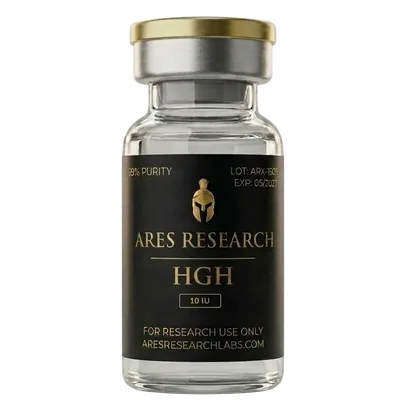
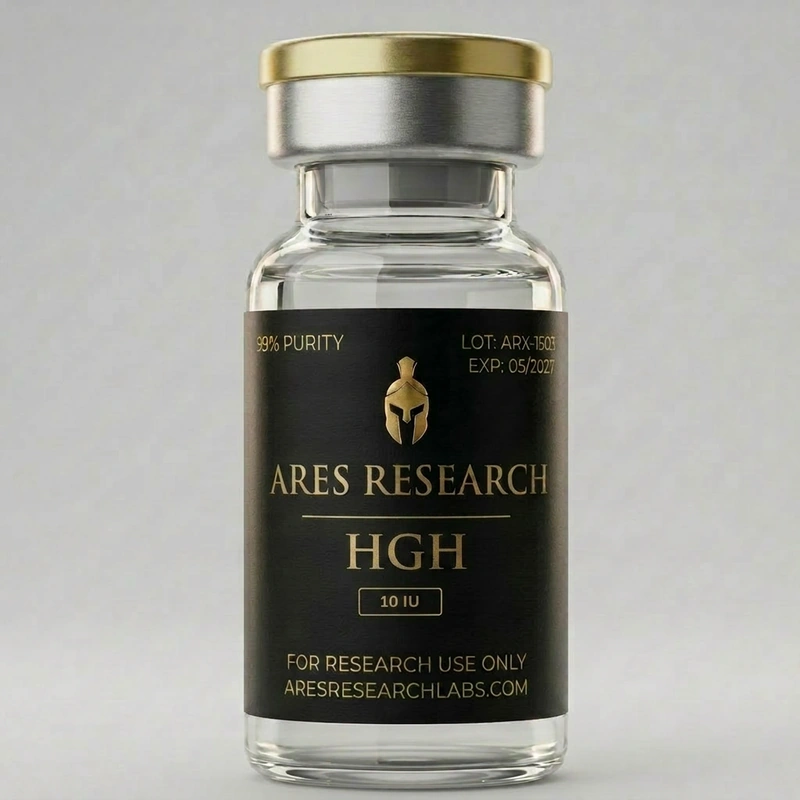
HGH vs Peptide-Based GH Stimulation: A Research Comparison
A definitive research comparison of exogenous HGH (somatropin) versus peptide-based GH axis stimulation using GHRH analogues and GHRPs — covering pulsatility, physiological authenticity, IGF-1 profiles, receptor sensitivity, regulatory status, cost, and how to select the right approach for specific research applications.
The Fundamental Difference: Bypassing vs Stimulating the Axis
The most important distinction between exogenous HGH and peptide-based GH approaches is where in the physiological hierarchy each intervention operates. Exogenous HGH (somatropin) bypasses the entire hypothalamic-pituitary GH axis — it enters circulation as pre-formed GH protein and acts directly on GH receptors in peripheral tissues without engaging the pituitary at all. In fact, exogenous GH suppresses pituitary GH output through negative feedback on GHRH neurons and by increasing somatostatin tone — so the pituitary actually produces less GH while exogenous GH is being administered.
Peptide-based approaches — GHRH analogues (Sermorelin, Modified GRF 1-29, Tesamorelin, CJC-1295) and GHRPs (Ipamorelin, GHRP-2, GHRP-6, Hexarelin) — work through the pituitary. They stimulate GHRH receptors or GHS-R1a receptors on pituitary somatotroph cells, causing those cells to synthesise and release GH in discrete pulses. The hypothalamic-pituitary axis remains intact and functional.
This single architectural difference — bypass vs stimulate — cascades into every downstream difference between the two approaches: pulsatility, IGF-1 profile, receptor sensitivity, metabolic side effects, and the degree to which the intervention resembles normal physiology.
Exogenous HGH (Somatropin) — Bypass Approach
- Pre-formed GH protein injected directly into circulation
- Bypasses hypothalamus and pituitary entirely
- Suppresses endogenous GH production via negative feedback
- Creates non-pulsatile, sustained GH exposure
- IGF-1 rises significantly — often supraphysiologically
- GH receptor downregulates with chronic continuous exposure
- Schedule III controlled substance (US)
- Requires precise dose calibration to target IGF-1 range
Peptide-Based GH Stimulation — Stimulation Approach
- Stimulates pituitary somatotrophs to produce and release GH
- Preserves entire hypothalamic-pituitary axis architecture
- Endogenous GH production maintained or enhanced
- GH released in discrete physiological pulses
- IGF-1 rises within or near physiological range
- GH receptor sensitivity preserved — pulsatility maintains responsiveness
- Not Schedule III controlled (US)
- Built-in ceiling: pituitary capacity limits maximum GH output
Pulsatility: Why It Matters in Research
GH is not meant to be present in circulation continuously. Healthy adults secrete GH in 6–12 discrete pulses per 24 hours, with the largest pulse occurring 60–90 minutes after sleep onset. Between pulses, GH levels are near zero. This pulsatile pattern is not incidental — it is biologically functional. GH receptor signalling is optimised for pulsatile exposure: the receptor signalling complex assembles and activates most efficiently in response to sharp concentration spikes followed by clearance, rather than sustained low-level exposure.
Continuous GH receptor exposure, as produced by daily exogenous HGH injections, triggers receptor internalisation and reduces surface receptor density — a process called homologous desensitisation. Over weeks to months of daily exogenous GH, liver GH receptor responsiveness decreases, the IGF-1 production response per unit of GH diminishes, and receptor density in peripheral tissues falls.
Peptide-based approaches that stimulate pulsatile GH release preserve receptor sensitivity precisely because the pulsatile GH profile allows receptor recovery between pulses. Ipamorelin administered twice or three times daily produces discrete GH pulses separated by low-GH intervals that permit GH receptor resensitisation — mimicking the normal physiological architecture and maintaining receptor sensitivity over chronic use.
IGF-1 Profile: Physiological vs Supraphysiological
Both approaches raise IGF-1, but with important differences in magnitude, consistency, and temporal profile. Exogenous HGH at commonly used research doses drives IGF-1 to levels that frequently exceed the physiological range for the subject's age — creating supraphysiological IGF-1 exposure that raises theoretical concerns about cancer-promoting mitogenic signalling and drives more pronounced insulin resistance through SOCS-mediated suppression of insulin receptor substrate signalling.
Peptide-based approaches raise IGF-1 within or near the physiological range because the pituitary's finite GH secretory capacity provides a natural ceiling. Even with maximal peptide stimulation, the pituitary cannot produce more GH than its somatotroph cell mass supports — constraining IGF-1 elevation to a biologically plausible range.
Master Comparison
Mechanism Level — Exogenous HGH: peripheral (bypasses axis). GHRH analogues: pituitary (GHRH-R). GHRPs: pituitary (GHS-R1a). Combined: dual pituitary receptors.
GH Pattern — HGH: non-pulsatile, tonic elevation. GHRH: pulsatile (GHRH-R driven). GHRP: pulsatile (GHS-R1a driven). Combined: amplified pulsatile.
Endogenous GH — HGH: suppressed by feedback. Peptide approaches: preserved or enhanced. Combined: maximally enhanced.
IGF-1 Level — HGH: often supraphysiological. Peptide approaches: near physiological range. Combined: upper physiological range.
GH Receptor Sensitivity — HGH: decreases with chronic use. Peptide approaches: maintained via pulsatility.
Insulin Resistance Risk — HGH: higher (continuous GH). Peptides: lower (pulsatile). Combined: low-to-moderate.
Somatostatin Regulation — HGH: bypassed entirely. GHRH: preserved. GHRP: partially suppressed. Combined: optimally modulated.
Regulatory Status (US) — HGH: Schedule III controlled. Research peptides: unscheduled research compounds.
Human Clinical Data — HGH: decades of RCT data. Tesamorelin: Phase II/III. Other peptides: limited human data.
Physiological Authenticity — HGH: low (axis bypassed). Peptide approaches: high (axis intact).
When Exogenous HGH Is the Appropriate Research Choice
Despite its limitations in physiological authenticity, exogenous HGH has specific research contexts where it remains the appropriate choice. When the research requires a defined, precisely controllable GH concentration in circulation — independent of pituitary capacity or axis responsiveness — exogenous HGH provides a pharmacological precision that peptide approaches cannot match. In GH-deficient animal models where the pituitary is absent or non-functional, exogenous HGH is the only option. In research comparing dose-response relationships between specific GH concentrations and biological endpoints, exogenous HGH allows independent titration of GH levels that peptide stimulation cannot achieve.
Exogenous HGH is also the definitive reference compound against which all other GH axis interventions are measured — decades of clinical trial data provide context for interpreting IGF-1 levels, body composition changes, and adverse effects in ways that remain more robust than the peptide literature.
Choose Exogenous HGH when research requires:
- Precise, defined circulating GH concentrations
- GH-deficient animal or human model (no pituitary function)
- Comparison to established clinical HGH literature
- Dose-response studies between GH and a specific endpoint
- Research requiring supraphysiological IGF-1 elevation
- Studies in which axis integrity is not a variable
When Peptide-Based Approaches Are Superior
For research contexts prioritising physiological authenticity — particularly studies of GH pulsatility, GH receptor biology, the regulatory architecture of the GH axis, or long-term GH axis function — peptide approaches are methodologically superior. They are also clearly preferable for research in aging populations where the goal is restoration of physiological GH pulsatility (treating somatopause mechanistically), rather than pharmacological override of the axis with supraphysiological GH exposure.
The lower regulatory burden of research peptides versus Schedule III HGH also makes peptide-based approaches more accessible for many research institutions and reduces the documentation and oversight requirements that govern GH use in research settings.
Choose a peptide approach when research requires:
- Physiological GH pulsatility preservation
- GH axis integrity and somatostatin regulation studies
- GH receptor sensitivity as an endpoint
- Long-term protocols where axis suppression is undesirable
- IGF-1 elevation within physiological range
- Lower regulatory burden and access requirements
The Optimal Combination Protocol
The most physiologically complete peptide approach for GH axis research combines a GHRH analogue (Modified GRF 1-29 or Sermorelin) with a GHRP (Ipamorelin preferred for clean profile). The GHRH analogue activates GHRH-R to increase GH pulse amplitude and GH gene transcription, while Ipamorelin activates GHS-R1a to amplify the pulse via a complementary pathway and partially attenuate somatostatin. The combined response produces GH pulses 3–5× the magnitude of either agent alone — matching or exceeding exogenous HGH body composition effects in research models, while preserving axis integrity, pulsatility, and receptor sensitivity that exogenous GH does not.
Related Research
- HGH (Somatropin) Research Overview
- HGH Dosing Protocols in Research
- HGH & Body Composition Research
- HGH for Anti-Aging: What the Research Shows
References
- Ho KK. "Consensus guidelines for the diagnosis and treatment of adults with GH deficiency II." Eur J Endocrinol. 2007;157(6):695–700.
- Hartman ML, et al. "Augmented growth hormone (GH) secretory burst frequency and amplitude mediate enhanced GH secretion during a two-day fast in normal men." J Clin Endocrinol Metab. 1992;74(4):757–765.
- Raun K, et al. "Ipamorelin, the first selective growth hormone secretagogue." Eur J Endocrinol. 1998;139(5):552–561.
- Corpas E, Harman SM, Blackman MR. "Human growth hormone and human aging." Endocr Rev. 1993;14(1):20–39.
- Ionescu M, Frohman LA. "Pulsatile secretion of growth hormone persists during continuous stimulation by CJC-1295." J Clin Endocrinol Metab. 2006;91(12):4792–4797.
- Thorner MO, et al. "Once daily subcutaneous growth hormone-releasing hormone acetate leads to increased growth hormone and insulin-like growth factor-I levels." J Clin Endocrinol Metab. 1990;70(6):1577–1582.
HGH Research Library
HGH (Somatropin) Research Overview
Reference primer on recombinant human growth hormone — receptor signalling (JAK2/STAT5, MAPK, PI3K), pharmacokinetics, and the clinical evidence base for somatropin in GH-axis research.
HGH Dosing Protocols in Research: Low vs High Dose Models
IU/mg conversion, physiological vs supraphysiological dose ranges, IGF-1 target ranges by age, timing strategies, and dose-response evidence from the published HGH clinical literature.
HGH & Body Composition: Lean Mass, Fat Loss & Recovery Research
Comprehensive review of documented mechanisms — lipolysis, IGF-1–mediated protein synthesis, and recovery markers — examined across the published HGH body-composition literature.
HGH for Anti-Aging: What the Research Shows
From the landmark 1990 Rudman study through current data on somatopause, this review examines what the longevity and anti-aging research literature actually demonstrates about GH restoration.
Related Research Articles
What is BPC-157? A Research Primer
A comprehensive research primer on BPC-157 (Body Protection Compound-157) — a pentadecapeptide derived from human gastric juice. Covers origins, mechanism of action, tendon and gut healing research, angiogenesis, and CNS research findings.
Peptide Reconstitution 101
A complete step-by-step guide to reconstituting lyophilized research peptides. Covers bacteriostatic water vs sterile water, reconstitution math, injection technique, storage after reconstitution, and common mistakes to avoid.
GHK-Cu Research Overview
A copper-binding tripeptide endogenous to human plasma, studied extensively in wound healing, collagen synthesis, antioxidant defense, and gene expression regulation within cellular research models.