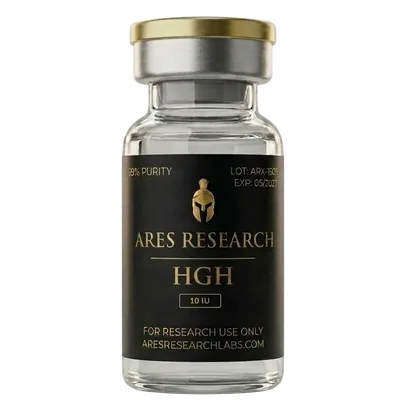
Tesamorelin Safety Profile and Limitations
Tesamorelin Safety Profile and Limitations: research-context overview for laboratory reference at Ares Research.
Tesamorelin is a synthetic analogue of growth hormone-releasing hormone (GHRH) that has been extensively studied for its ability to stimulate the endogenous production of growth hormone (GH). In laboratory research settings, it is primarily recognized for its high specificity in targeting adipose tissue reduction without significantly disrupting glucose homeostasis compared to exogenous human growth hormone. Understanding the safety profile and pharmacological limitations of Tesamorelin is critical for researchers investigating its role in metabolic regulation and pituitary function.
Mechanism of Action and Hormonal Signaling Tesamorelin (TH9507) consists of the 44-amino acid sequence of human GHRH with an anchored trans-3-hexenoic acid group at the N-terminal position. This structural modification enhances its stability and resistance to enzymatic degradation by dipeptidyl peptidase IV, extending its half-life relative to endogenous GHRH.
Upon administration in research models, the peptide binds to the growth hormone-releasing hormone receptors (GHRHR) in the anterior pituitary gland. This binding triggers the adenylate cyclase pathway, increasing cyclic adenosine monophosphate (cAMP) levels, which subsequently stimulates the synthesis and pulsatile release of somatotropes. Unlike direct administration of HGH, which can suppress natural pituitary function through negative feedback, Tesamorelin preserves the natural rhythmic secretion of growth hormone, maintaining the physiological axis between the hypothalamus, pituitary, and peripheral tissues.
Clinical Research Findings and Efficacy Data The primary body of research surrounding Tesamorelin involves its impact on lipodystrophy and visceral adipose tissue (VAT). Peer-reviewed clinical trials have demonstrated that the peptide selectively reduces visceral fat—the metabolically active fat surrounding internal organs—by approximately 15% to 20% over a 26-week period.
Research indicates that the reduction in VAT is mediated by the systemic increase in Insulin-like Growth Factor 1 (IGF-1), which promotes lipolysis. While Tesamorelin is highly effective for VAT reduction, studies have shown that subcutaneous fat (the fat located directly under the skin) remains largely unaffected. This specificity makes it a unique tool for researchers studying metabolic syndrome and ectopic fat deposition. Furthermore, while many GH-secretagogues like Ipamorelin are utilized for general GH elevation, Tesamorelin remains the most robustly documented GHRH analogue for targeted visceral lipolysis in immunodeficient or metabolically compromised models.
Comparative Pharmacology and Research Context In the landscape of peptide research, Tesamorelin is often compared to other GHRH analogues such as CJC-1295. While both target the GHRHR, CJC-1295 (particularly the DAC version) aims for a prolonged elevation of GH levels through albumin binding. In contrast, Tesamorelin provides a more regulated, albeit potent, stimulus that mimics the natural GHRH signal.
Safety data across multiple Phase III trials suggests that while the peptide is generally well-tolerated in controlled environments, it does induce an increase in IGF-1 levels that must be monitored. If IGF-1 levels exceed the upper limit of the standard laboratory range, the risk of cellular proliferation or joint discomfort increases. Unlike less specific GH stimulants, Tesamorelin has shown a neutral-to-positive effect on lipid profiles, often lowering non-HDL cholesterol levels in research subjects.
Laboratory Handling and Reconstitution For rigorous scientific inquiry, the stability of Tesamorelin must be maintained through proper handling. The peptide is typically provided in a lyophilized (freeze-dried) state to ensure molecular integrity during transport.
- [Reconstitution](/tools): In a laboratory setting, Tesamorelin is reconstituted using Bacteriostatic Water (0.9% benzyl alcohol) or sterile saline. The diluent should be introduced slowly along the side of the vial to avoid agitation, which can denature the peptide bonds.
- Storage: Once reconstituted, the solution is highly sensitive to temperature. It should be stored at refrigerated temperatures (2°C to 8°C). Research indicates that the peptide begins to degrade rapidly if left at room temperature for extended periods.
- Light Sensitivity: Exposure to direct UV light can lead to photodegradation of the amino acid chain. Vials should remain in secondary packaging or dark storage until the moment of use.
Documented Limitations and Adverse Observations Despite its efficacy, Tesamorelin has defined limitations that researchers must account for in experimental design.
Glucose Metabolism While Tesamorelin is noted for having a lower risk of glycemic disruption than exogenous GH, it may still influence insulin sensitivity. In some research cohorts, a transient increase in HbA1c or fasting blood glucose has been observed. This necessitates the monitoring of glucose parameters in any metabolic study involving growth hormone secretagogues.
Immunogenicity A significant limitation identified in long-term studies is the development of anti-Tesamorelin antibodies. Approximately 50% of subjects in certain clinical trials developed these antibodies. While most cases did not see a decrease in efficacy, a small subset of the population may experience neutralized effects or hypersensitivity reactions (such as rashes or urticaria) at the injection site due to this immune response.
Non-Persistent Effects Research has consistently shown that the benefits of Tesamorelin—specifically the reduction in visceral adiposity—are not permanent. Upon cessation of the peptide administration, visceral fat levels typically return to baseline within several months. This suggests that Tesamorelin acts as a modulator of the GHRH axis rather than a permanent corrective for metabolic dysfunction.
Summary of Safety Considerations The safety profile of Tesamorelin is characterized by its specificity. Potential side effects observed in laboratory models include arthralgia (joint pain), peripheral edema, and injection site erythema. Because IGF-1 promotes cell growth, the use of Tesamorelin is strictly avoided in research models with active malignancies or a history of pituitary adenomas. Researchers must balance the potent lipolytic effects with the systemic requirement to keep IGF-1 levels within physiological thresholds to prevent secondary complications.
Frequently Asked Questions
Q: How does Tesamorelin differ from standard GHRH 1-29? Tesamorelin is a modified version of the 44-amino acid GHRH. The addition of a trans-3-hexenoic acid group makes it significantly more resistant to the enzyme dipeptidyl peptidase IV, resulting in a longer half-life and greater potency in stimulating the pituitary gland compared to the shorter GHRH 1-29 fragment.
Q: Can Tesamorelin be used to increase muscle mass in laboratory models? While Tesamorelin increases GH and IGF-1—both of which are anabolic—primary research indicates its effects are far more pronounced for adipose tissue reduction than for significant muscle hypertrophy. Other peptides or research compounds may be more suited for investigating lean muscle mass accrual.
Q: What is the impact of Tesamorelin on natural growth hormone production? Tesamorelin acts as a secretagogue, meaning it stimulates the natural release of GH from the pituitary. Because it mimics the signal of the hypothalamus, it generally maintains the natural feedback loops of the endocrine system, though prolonged use at high dosages can eventually shift the sensitivity of the GHRH receptors.
Q: Is the development of antibodies a common issue in peptide research? Yes, several therapeutic peptides can trigger an immune response where the body recognizes the synthetic sequence as a foreign antigen. In the case of Tesamorelin, antibody development is common but rarely results in the complete loss of drug efficacy or severe systemic anaphylaxis in controlled research settings.
Research Use Only. This content is intended for laboratory and research purposes only. Not for human consumption, diagnosis, or treatment.
<!-- RESTORED_PRODUCT_LINK --> CJC-1295
Related Research Articles
Peptides for Lean Muscle Research 2026
Lean muscle research peaks in summer alongside weight loss research — researchers studying muscle preservation and growth during summer training cycles create consistent demand for the GH-axis and IGF-1 compound categories. Here's the summer 2026 lean muscle research guide.
Best Peptides for Tanning Research — Summer 2026 Guide
Melanocortin research compounds see their sharpest demand peak in summer months — MT-2 is the top-searched compound in this category by a significant margin. Here's the complete summer guide covering mechanism, sourcing, and verification.
Tesamorelin for Visceral Fat Research 2026
Tesamorelin's FDA-approved lipodystrophy history makes it unique among research peptides for visceral fat research — it carries a published clinical evidence base for visceral adipose tissue reduction that no other GHRH analog can match. Here's the research case and where to source it.
MT-2 Tanning Peptide Research — Summer 2026 Guide & Where to
MT-2 is the most searched melanocortin research compound in summer months — its MC1R-mediated pigmentation mechanism and the demand for verified domestic sourcing both peak during July and August. Here's the complete research and sourcing guide.
HGH Research Alternatives 2026 — Secretagogues, Fragments &
Researchers studying the growth hormone axis have distinct options — each with different mechanisms, evidence bases, and research applications. Here's how CJC-1295, Ipamorelin, Tesamorelin, HGH Fragment 176-191, and direct HGH compare across the key research dimensions.
Skin Peptide Stack Research 2026
Skin biology is addressed by several distinct research peptide mechanisms — collagen gene expression, vascularization, GH-axis IGF-1 signaling, and even the rapid skin laxity changes associated with significant weight loss on GLP compounds. Here's the complete picture.
Neutral, moderated research discussion. Laboratory use only.
More compound guides, hubs, and educational research materials.