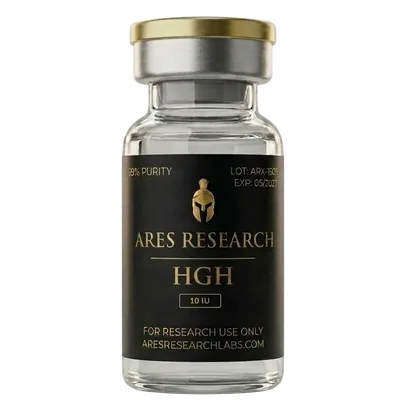
Melanotan 2 (MT-2) Dosage Calculator
Melanotan 2 (MT-2) is supplied lyophilized, most commonly in 10 mg vials, and research amounts are microgram-scale. Enter your vial strength and diluent volume to convert a target amount into an exact U-100 syringe reading.
- Concentration
- 5000 mcg / mL
- Concentration
- 5.00 mg / mL
- Per syringe unit
- 50.0 mcg / unit
- Draws per vial
- 40.0
- Total solution
- 200 units
Every figure below is arithmetic performed in your browser. Nothing here is a protocol, recommendation, or medical guidance — all Ares Research materials are supplied for in-vitro laboratory research only.
HPLC purity and mass-spec identity confirmation, published per batch. US-based tracked shipping.
Why MT-2 usually needs more diluent
A 10 mg vial in 1 mL gives 10,000 mcg/mL, where a 250 mcg draw is only 2.5 units — a reading too small to measure reliably on a standard U-100 barrel. The same vial in 5 mL gives 2,000 mcg/mL and puts the draw at 12.5 units. For microgram-scale work on a high-strength vial, more diluent is generally the accuracy-preserving choice.
Reading half-unit marks
Many U-100 syringes are graduated in whole units only, so a calculated 12.5-unit draw sits between marks. If your calculated reading consistently lands on a half-unit, adjust the diluent volume until it falls on a whole graduation — the calculator updates instantly as you change the water volume.
Handling notes
MT-2 is light-sensitive. Keep both the lyophilized vial and the reconstituted solution shielded from light and refrigerated. Add bacteriostatic water down the vial wall and swirl gently rather than shaking.
Frequently asked questions
How many units is 250 mcg of Melanotan 2?
+
With a 10 mg vial reconstituted in 2 mL, the concentration is 5,000 mcg/mL, so 250 mcg is 0.05 mL — 5 units on a U-100 insulin syringe. In 5 mL of diluent the same amount is 12.5 units.
How much bacteriostatic water for a 10 mg MT-2 vial?
+
2 mL to 5 mL are common. Because MT-2 amounts are microgram-scale on a relatively high-strength vial, smaller diluent volumes produce very low unit readings where measurement error is large. Use the calculator to find the volume that puts your usual draw on a whole graduation.
How many doses are in a 10 mg Melanotan 2 vial?
+
A 10 mg vial contains 10,000 mcg, so it holds 40 draws at 250 mcg, 20 at 500 mcg, or 100 at 100 mcg. The diluent volume does not affect this count.
How should reconstituted material be stored?
+
Once reconstituted, most research peptides are held refrigerated at roughly 2–8°C, protected from light, in the original sealed vial. Bacteriostatic water contains 0.9% benzyl alcohol, which suppresses microbial growth in the diluent. Temperature, light exposure, and repeated freeze-thaw cycles all affect stability, so consult the compound-specific certificate of analysis and published stability data.
How do I read a U-100 insulin syringe?
+
A U-100 barrel is graduated in units where 100 units equal 1 mL, so each single-unit mark is 0.01 mL. To convert a volume in mL to units, multiply by 100 — 0.25 mL is 25 units. This calculator reports both figures so you can cross-check the mark against the volume.
Related calculators
Any vial, any diluent volume, any target amount → concentration, syringe units, doses per vial.
Compare diluent volumes before you mix — see how each one changes the syringe reading.
mL ↔ U-100 units, plus how many mcg each unit carries at your concentration.
Purity, storage & compliance documentation
- How to Read a Peptide Certificate of Analysis (COA)
- Peptide Storage and Handling: Temperature, Light and Stability