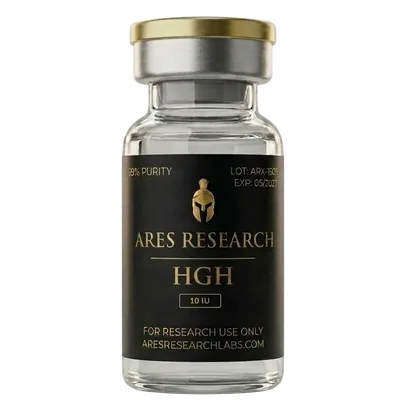
HGH Complete Research Guide 2026
Complete HGH research guide 2026. Somatropin mechanism, JAK2/STAT5 signaling, IGF-1 axis, body composition findings, dosing models and safety profile from published literature.
Recombinant human growth hormone — somatropin — remains the most extensively researched compound in endocrine science. With a clinical evidence base spanning six decades and FDA approval in multiple indications, somatropin serves as the definitive reference compound for growth hormone axis research.
Molecular Biology and Receptor Signaling
Somatropin is a 191-amino acid single-chain polypeptide identical to pituitary-derived human growth hormone, binding with equivalent affinity to the growth hormone receptor — a class I cytokine receptor present in liver, muscle, adipose, and most peripheral tissues.
GHR binding triggers receptor dimerization and JAK2 activation, initiating three primary downstream cascades: JAK2/STAT5 (primary anabolic signaling pathway driving IGF-1 gene transcription), MAPK/ERK (cell proliferation, differentiation, and survival), and PI3K/Akt (metabolic effects including glucose uptake and protein synthesis).
The GH/IGF-1 Axis
The majority of HGH's anabolic effects are mediated through hepatic IGF-1 generation. GH stimulates hepatocytes to produce IGF-1, which circulates bound to one of six IGFBPs. The ternary complex of IGF-1, IGFBP-3, and acid-labile subunit represents the major circulating form with a half-life of 12-15 hours. Free IGF-1 activates IGF-1R driving PI3K/Akt/mTOR signaling — the primary mediator of protein synthesis and anabolic tissue effects.
Body Composition Research
Lean mass — Meta-analyses of GH administration in GH-deficient adults consistently document significant lean mass increases, with mean changes of 2-3kg over 6-month periods driven by both direct GH effects on protein metabolism and IGF-1 driven mTOR activation.
Fat mass — GH directly stimulates lipolysis in adipose tissue through hormone-sensitive lipase activation, independent of IGF-1. The landmark Rudman 1990 NEJM study demonstrated 14.4% mean reduction in adipose tissue mass over 6 months in elderly men. Visceral adipose tissue shows preferential reduction consistent with higher GH receptor density in visceral depots.
Muscle fiber composition — Research documented GH effects on type II muscle fiber cross-sectional area, with studies showing preferential hypertrophy of fast-twitch fiber types consistent with GH receptor expression patterns in skeletal muscle.
Dosing Models in Published Research
Physiological replacement range (0.1-0.3 mg/day) — Used in GH deficiency research, targeting IGF-1 restoration to age-appropriate reference ranges. Most favorable risk-benefit profile in published safety analyses.
Intermediate research dosing (0.3-1.0 mg/day) — Used in body composition research in non-deficient subjects. Most positive body composition findings come from this range with effects becoming statistically significant at 3-6 months.
Supraphysiological dosing (>1.0 mg/day) — Used in athletic performance research contexts. Associated with larger effect sizes but higher adverse event rates including edema, carpal tunnel syndrome, and glucose intolerance.
IU to mg conversion — The standard research conversion is 1 mg ≈ 3 IU of recombinant somatropin. Always verify against the specific COA for batch-specific potency confirmation.
Somatopause and Aging Research
GH secretion declines approximately 14% per decade after age 30 — a phenomenon termed somatopause. The landmark Rudman 1990 NEJM study demonstrated GH restoration in elderly men reversed multiple markers of aging over 6 months, generating decades of subsequent research examining whether restoring GH to younger levels reverses or merely masks age-associated decline.
Safety Profile
The research-grade HGH safety profile is well-characterized from decades of clinical use. Edema and fluid retention occur in 20-30% of subjects in clinical trials, typically dose-dependent and resolving with dose reduction. Carpal tunnel syndrome is reported in approximately 20% of subjects in high-dose studies. Glucose intolerance — from GH's counter-regulatory effects on insulin signaling — is dose-dependent and generally reversible. IGF-1 monitoring is standard in most research protocols.
HGH is a prescription medication regulated by the FDA. All information is for laboratory and research reference only. Not for human consumption outside of medically supervised contexts. For research use only per Ares Research terms.
Running the numbers for a protocol? Use the research calculators to convert mg, mL, and syringe units.
Related Research Articles
Peptides for Lean Muscle Research 2026
Lean muscle research peaks in summer alongside weight loss research — researchers studying muscle preservation and growth during summer training cycles create consistent demand for the GH-axis and IGF-1 compound categories. Here's the summer 2026 lean muscle research guide.
Best Peptides for Tanning Research — Summer 2026 Guide
Melanocortin research compounds see their sharpest demand peak in summer months — MT-2 is the top-searched compound in this category by a significant margin. Here's the complete summer guide covering mechanism, sourcing, and verification.
HGH Research Alternatives 2026 — Secretagogues, Fragments &
Researchers studying the growth hormone axis have distinct options — each with different mechanisms, evidence bases, and research applications. Here's how CJC-1295, Ipamorelin, Tesamorelin, HGH Fragment 176-191, and direct HGH compare across the key research dimensions.
Skin Peptide Stack Research 2026
Skin biology is addressed by several distinct research peptide mechanisms — collagen gene expression, vascularization, GH-axis IGF-1 signaling, and even the rapid skin laxity changes associated with significant weight loss on GLP compounds. Here's the complete picture.
Neutral, moderated research discussion. Laboratory use only.
More compound guides, hubs, and educational research materials.