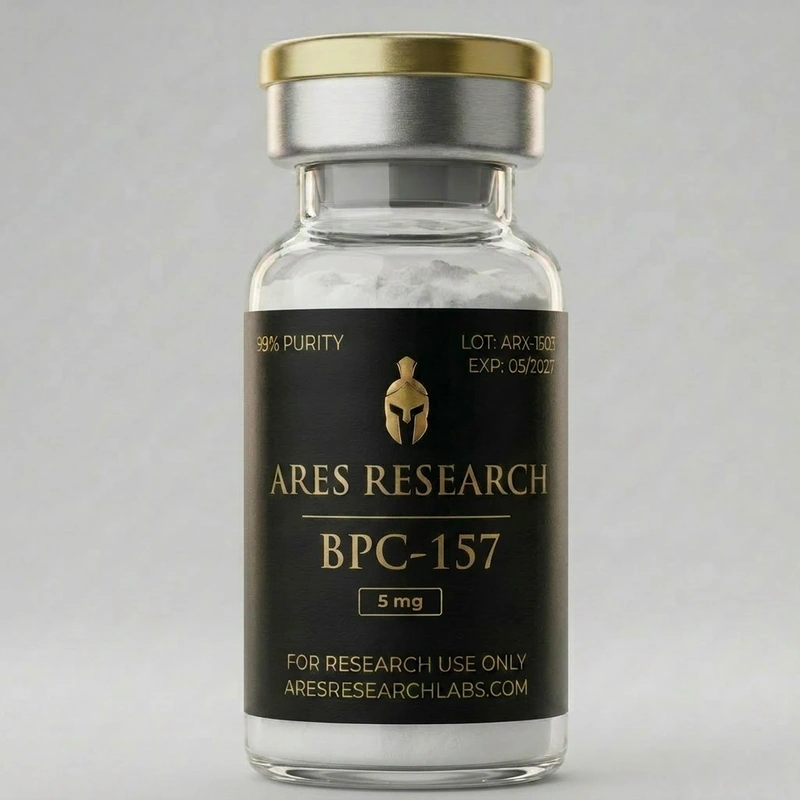
BPC-157
Same-day shipping — Ships next business day, cutoff 3 PM ET.
≥99% purity verified by independent HPLC and mass spectrometry (MS) through Janoshik Analytical. Intended for laboratory research use only; not for human consumption, diagnosis, or treatment. View transparency report Compliance PDFs
Documentation & standards
- How to Read a Peptide Certificate of Analysis (COA)
- Peptide Purity Verification: Turning a Claim Into Evidence
- Peptide Storage and Handling: Temperature, Light and Stability

Research-grade peptide commonly studied in cellular and tissue research models.
Mix and match any items — discount applies automatically at checkout.
Curated research selection for tissue and regenerative research models.
Build the full stack →Batch transparency
- Batch / lot
- Released with your order
- Testing lab
- Janoshik Analytical
- Purity (HPLC)
- ≥99% target spec
- Identity (MS)
- Available on request
- Report issued
- Available on request
- Full PDF report
- By request
Every request returns a reference number and a live status page. See all published batch records →
For laboratory research use only — not for human or veterinary use.
Earn 29 loyalty points on this purchase · 100 pts = $5 off
Create a Research Account to unlock full batch data, COAs, and priority releases.
Intended strictly for research and laboratory use only. Not for human consumption.
About BPC-157
Third-party purity testing available upon request.
Research Classification
Storage Information
BPC-157 Purity & COA Verification
For laboratory research use only. Not for human consumption, diagnosis, or treatment.
BPC-157 COA and third-party testing
Every BPC-157 batch is independently analysed before release. HPLC measures purity against a ≥99% standard, mass spectrometry confirms molecular identity, and the published panel records heavy-metals, endotoxin and sterility screening where applicable. The third-party report is tied to the batch number printed on the vial, so a third-party tested BPC-157 result can be verified at source rather than taken from a summary claim.
Testing documentation is supplied for laboratory research use only and does not support human, veterinary, diagnostic or therapeutic use.
What is BPC-157?
BPC-157 is a synthetic peptide fragment of a sequence described in the literature as Body Protection Compound, a protein sequence originally identified in gastric juice. The designation refers to a 15-amino-acid chain reproduced by solid-phase peptide synthesis rather than extracted from tissue.
Published BPC-157 research is preclinical and has examined tissue-repair and gastrointestinal-related endpoints in controlled laboratory models. Reported lines of investigation include angiogenesis markers, nitric-oxide pathway signalling, and connective-tissue and gastrointestinal-mucosa repair measures. These describe measurements recorded in experimental models only; they do not establish an effect, benefit or suitability for any person.
Ares Research supplies BPC-157 as analytical research material with batch-linked documentation, which is the format laboratories generally require when qualifying a peptide as a comparison or reference material.
BPC-157 product specifications
| Compound | BPC-157 (pentadecapeptide, Body Protection Compound fragment) |
|---|---|
| Class | Synthetic peptide fragment — 15 amino acids |
| Purity standard | ≥99% (HPLC, with identity confirmed by mass spectrometry) |
| Physical form | Lyophilised powder in a sealed glass vial |
| Available vial sizes | 5mg, 10mg and 20mg |
| Storage | Refrigerated and protected from light; batch handling documentation included |
| Testing | Third-party COA covering identity, purity, heavy metals, endotoxins and sterility |
| Origin | Synthesised and shipped domestically (USA) |
| Intended use | Laboratory research use only — not for human or veterinary use |
BPC-157 research questions
+What is BPC-157?
BPC-157 is a synthetic peptide fragment derived from a sequence described in the literature as Body Protection Compound, a protein sequence identified in gastric juice. It is a short 15-amino-acid chain and is supplied by Ares Research strictly as laboratory research material, not for human or veterinary use.
+What has published BPC-157 research examined?
Published preclinical literature on BPC-157 has examined tissue-repair and gastrointestinal-related endpoints in controlled laboratory models, including angiogenesis markers, nitric-oxide pathway signalling and connective-tissue repair measures. These are recorded research observations in experimental models only and do not describe an outcome for any person.
+Is your BPC-157 third-party tested, and can I see the COA?
Yes. Every BPC-157 batch is independently analysed before release, and the Certificate of Analysis is tied to the batch number printed on the vial. You can look up the batch COA through the Ares Research COA lookup and review the published purity record on the transparency page.
+What purity standard does Ares Research BPC-157 meet?
BPC-157 is produced to a ≥99% purity standard, with purity measured by HPLC and molecular identity confirmed by mass spectrometry. The third-party panel also covers heavy metals, endotoxins and sterility where applicable.
+Can BPC-157 be used as a reference material?
Each vial is supplied with batch-linked analytical documentation, which is what laboratories typically require when qualifying a peptide as a comparison or reference material. Suitability for any specific analytical method remains the responsibility of the receiving laboratory.
+How is BPC-157 shipped?
BPC-157 is shipped domestically from the United States with tracked delivery. Vials are packed to protect the lyophilised material in transit and are supplied exclusively for laboratory research use.
+How should BPC-157 be stored?
Keep sealed lyophilised vials refrigerated and protected from light and moisture. After laboratory reconstitution, keep the material refrigerated and follow the handling documentation supplied with the batch.
BPC-157 — Compound Information & Scientific Literature
Reference data for laboratory personnel: molecular identity, storage and stability handling, our analytical testing panel, and peer-reviewed literature indexed on PubMed.
Molecular Profile
| Compound | BPC-157 |
|---|---|
| Molecule type | Synthetic pentadecapeptide (15 aa) |
| Class | Cytoprotective Peptide |
| Catalog category | Recovery |
| Physical format | Lyophilized vial |
Handling Reference
-20 °C, protected from light and moisture
24 months from date of manufacture in the sealed vial
2-8 °C (refrigerated), do not freeze after reconstitution
Stability studied out to approximately 28 days under continuous refrigeration
Analytical Testing Panel
Verified by Janoshik Analytical — full panel, every batch. Second independent lab confirmation is being added batch by batch.
Quantifies the main peak against related-substance peaks, so the stated purity percentage is measured rather than assumed.
Every BPC-157 lot passes all 8 stages before it is released. Expand a stage to see the method and why we run it.
- Method on the COARP-HPLC (UV 214 nm)Why Ares runs it
Quantifies the main peak against related-substance peaks, so the stated purity percentage is measured rather than assumed.
- Method on the COAQuantitative HPLC mass/concentration assayWhy Ares runs it
Confirms the vial actually contains the labeled amount — purity alone says nothing about how much material is in the vial.
- Method on the COAMass Spectrometry (ESI-MS)Why Ares runs it
Confirms the measured molecular mass matches the declared compound — the check that catches a mislabeled or substituted vial.
- Method on the COAICP-MSWhy Ares runs it
Screens for elemental contaminants carried over from synthesis, reagents, or packaging.
- Method on the COAMembrane filtration, USP <71> methodologyWhy Ares runs it
Checks the finished lyophilized vial for microbial growth after fill and closure.
- Method on the COALAL assay (kinetic chromogenic)Why Ares runs it
Measures bacterial endotoxin load, a contamination marker that purity testing alone will not reveal.
- Method on the COAIndependent batch review against release specificationWhy Ares runs it
Ties the analytical numbers back to the paperwork — the lot you receive is the lot on the certificate.
- Method on the COALC-MS/MS targeted screenWhy Ares runs it
A contamination check most research suppliers never run, and the reason we run it on every batch regardless of compound.
PASS reflects the batch release standard every lot must meet before it ships. Per-lot results are published on that lot's Certificate of Analysis.
Peer-Reviewed References
Gastric pentadecapeptide body protection compound BPC 157 and its role in accelerating musculoskeletal soft tissue healing
Gwyer D et al. · Cell and tissue research, 2019 · PMID 30915550
View sourceStable Gastric Pentadecapeptide BPC 157 and Wound Healing
Seiwerth S et al. · Frontiers in pharmacology, 2021 · PMID 34267654
View sourcePentadecapeptide BPC 157 and the central nervous system
Vukojevic J et al. · Neural regeneration research, 2022 · PMID 34380875
View sourceMultifunctionality and Possible Medical Application of the BPC 157 Peptide-Literature and Patent Review
Józwiak M et al. · Pharmaceuticals (Basel, Switzerland), 2025 · PMID 40005999
View sourceEmerging Use of BPC-157 in Orthopaedic Sports Medicine: A Systematic Review
Vasireddi N et al. · HSS journal : the musculoskeletal journal of Hospital for Special Surgery, 2025 · PMID 40756949
View source
References are listed for literature-identification purposes only. Ares Research is not affiliated with the authors, journals, or institutions cited.
This material is supplied for laboratory and research use only. It is not for human or veterinary use, and it is not a drug, food, or cosmetic. These statements have not been evaluated by the Food and Drug Administration. No information on this page is intended to diagnose, treat, cure, or prevent any condition.
BPC-157 research questions
+What purity standard is BPC-157 supplied at?
Every BPC-157 batch is synthesized to ≥99% purity as verified by third-party HPLC and mass spectrometry. Batch-specific COAs are published on the product page.
+How should BPC-157 be reconstituted for laboratory research?
Lyophilized BPC-157 is typically reconstituted with bacteriostatic water for research use. Concentration depends on the study protocol; our reconstitution calculator at /tools/reconstitution-calculator handles the math.
+How is BPC-157 stored before and after reconstitution?
Unreconstituted vials are stored at -20°C protected from light. After reconstitution, solutions are refrigerated at 2–8°C and used within the timeframe specified by the study protocol.
+Is BPC-157 intended for human use?
No. BPC-157 is supplied strictly for laboratory research use only and is not for human or veterinary consumption.
Read the BPC-157 research
Research-only pharmacokinetic profile of BPC-157: serum half-life, Tmax, route comparisons, clearance and bioavailability — curated from published preclinical and clinical PK literature.
Read article →Thymosin Alpha-1 vs BPC-157: immune modulation vs tissue repair, mechanism, dosing and which to choose for a research endpoint.
Read article →A comprehensive research primer on BPC-157 (Body Protection Compound-157) — a pentadecapeptide derived from human gastric juice. Covers origins, mechanism of action, tendon and gut healing research, angiogenesis, and CNS research findings.
Read article →A literature-grounded reference for BPC-157's reported mechanisms, benefits across preclinical tissue-repair models, and documented safety profile — for research use only.
Read article →Compare BPC-157 and TB-500 (thymosin beta-4 fragment) — two leading tissue-repair research peptides — across mechanism, half-life, and published findings.
Read article →Compare GHK-Cu copper peptide and BPC-157 in skin, tissue repair, and regenerative research models.
Read article →How Ares compares for BPC-157
Independent, documentation-first breakdowns of the vendors researchers most often ask about for this compound. COA verification, US shipping, and sourcing transparency, side by side.
Frequently bought together
Curated complements for this compound — researchers most often pair it with these.
Research Use Disclaimer
Researcher Reviews
Sign in with the account that placed your order to leave a verified review.
Ask the Lab
No public questions yet — be the first to ask.
All testing documentation and COA data are provided for laboratory research use only and are not intended to support human consumption, diagnostic, or therapeutic use.
Independent Certificate of Analysis
Independently tested by Janoshik Analytical. Verified and batch-tracked by Ares Research. Additional reports available upon request.
No fillers. No shortcuts. Only verified compounds.
More from Recovery
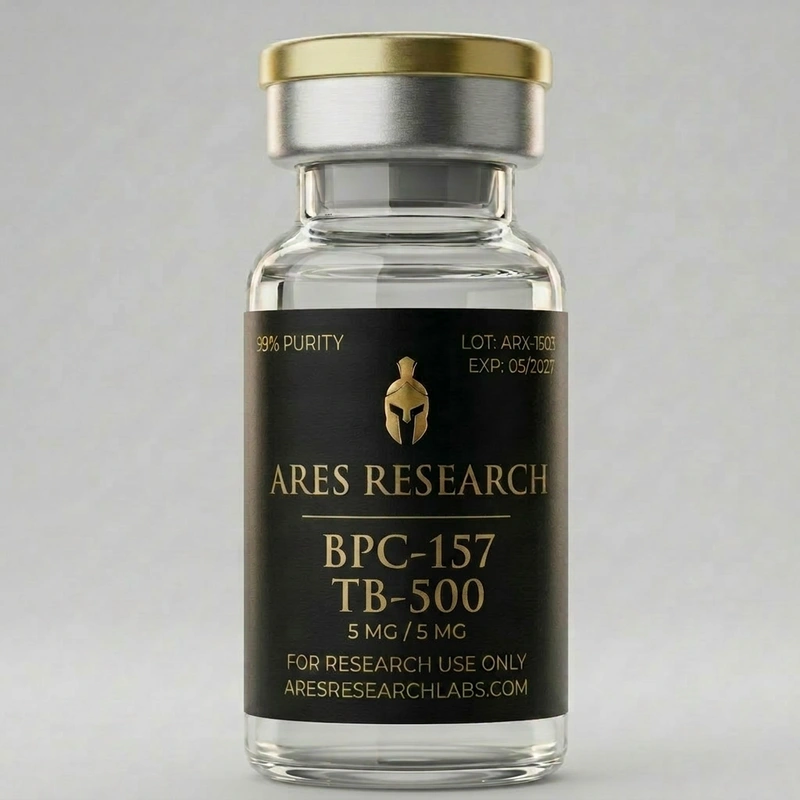
BPC-157 vs…
Researchers often weigh BPC-157 against these alternatives. Spec-by-spec breakdowns: