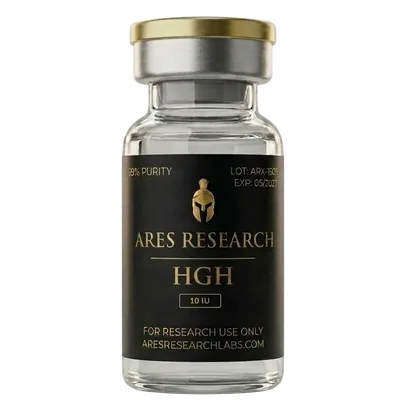
How to Vet a Research Peptide Supplier or Vendor (2026)
The full 2026 checklist for evaluating any research peptide supplier or vendor: named third-party labs, batch-specific COAs, published test methods, sourcing transparency, shipping, pricing sanity checks, and red flags.
Choosing a research peptide source is a due-diligence exercise, not a shopping decision. The market changed significantly through 2025 and 2026 — several long-standing vendors exited, and researchers who once had a default supplier are now evaluating new ones. The wrong supplier wastes budget on under-dosed or misidentified compounds and contaminates every downstream result in your lab notebook.
The smart approach is to apply the *same* criteria to every candidate rather than trusting marketing language. Here is the full checklist we apply when evaluating a supplier — the same criteria we hold ourselves to at Ares Research.
1. Third-party testing, and whether the lab is named
The single most important signal is independent testing. Look for whether a supplier tests through an accredited third-party laboratory — and whether they *name* the lab. "Independently tested" with no lab named is weaker than "tested by [named accredited lab]." Named labs can be checked; unnamed claims cannot. In-house QC is not third-party testing.
2. What should a batch-specific COA show?
A Certificate of Analysis (COA) verifies a compound's identity and purity. What separates strong suppliers from weak ones is whether the COA is batch-specific — matched to the lot you actually receive — rather than a single historical "golden batch" document reused across all inventory. A usable COA includes:
- [HPLC](/standards/purity-verification) purity with the actual chromatogram, not just a printed percentage.
- Mass spectrometry (MS) confirming the molecular weight matches the target sequence.
- Independent lab identification — Janoshik, Alphascience, or an equivalent accredited facility, on their own letterhead.
- Batch/[lot number](/standards/batch-traceability) on the COA that matches the label on the vial you receive.
If a supplier only shows a generic "≥99% purity" banner with no downloadable COA per lot, treat that as a marketing claim, not evidence.
3. How do I confirm what the testing actually covers?
Not all COAs test the same things. Common analyses include HPLC (purity), mass spectrometry (identity and molecular weight), and endotoxin screening. A supplier that publishes which methods were run gives you more to evaluate than one that simply asserts a purity percentage. Read the method line on the COA, not the headline number.
4. Sourcing and manufacturing transparency
Ask — or read the FAQ for — the answers to:
- Where is the peptide synthesized? (Country and, ideally, facility.)
- Is the same facility used across batches, or do they rotate suppliers?
- What is the lyophilization and fill process? Are vials filled under inert gas?
Suppliers that dodge these questions are usually reselling bulk material with no chain of custody.
5. Storage and shipping practices
Most research peptides are stable at room temperature for days, but longer transit windows compound degradation risk. Serious suppliers:
- Ship in insulated packaging with a cold pack for multi-day transit.
- Use tracked services (USPS Ground Advantage, UPS, FedEx) with delivery confirmation.
- Publish storage instructions on the product page and on the vial label.
Loose bubble mailers with no cold pack in July are a red flag, especially for GLP-family compounds and growth-hormone secretagogues.
6. Pricing sanity check
Peptide pricing follows real supply-side costs. If a vial is priced dramatically below the market average for the same milligram amount, one of three things is usually true:
- It is mislabeled or under-dosed.
- It is a different compound entirely (dilution, mannitol filler, or a cheaper analog).
- The supplier is running a loss-leader to acquire customers and will disappear in 90 days.
Compare pricing across at least three established suppliers before assuming a "deal" is legitimate.
7. Support and traceability
Real labs answer real questions. Before a first order, email support and ask something specific — reconstitution volume, storage half-life, or the COA for a particular lot. You are testing two things:
- Response time — a functioning business replies inside 48 hours.
- Technical accuracy — canned "consult a professional" replies mean nobody on staff understands the product.
8. Payment and refund policy
Research peptide suppliers typically accept crypto and card. Neither is a red flag on its own — the *policy* around them is what matters:
- A supplier that accepts only irreversible payment and publishes no refund policy is structurally set up to keep your money regardless of what arrives.
- A published reship/refund policy for damaged, lost, or mis-shipped orders is the baseline.
Payment flexibility (including crypto) has become a category norm as processors tightened. Clear shipping expectations, a stated damage policy, and responsive human support are the practical signals.
9. Independent sentiment, read critically
Third-party reviews and directories are useful — but read them knowing many operate on affiliate commissions and have an incentive to rank favorably. Cross-reference multiple sources, weight verifiable facts (named labs, published methods) over adjectives, and treat any single "top vendor" ranking as one data point.
10. What are the red flags to walk away from?
- No downloadable per-batch COA.
- COAs without batch numbers or independent lab letterhead.
- Prices 40%+ below market for equivalent mg.
- No physical address or business registration anywhere on the site.
- Social-media-only presence with no website history — a "peptide company" registered last month is not a company.
- Reviews only on the supplier's own site, with no third-party footprint.
- Marketing copy that describes dosing for humans.
11. What does "For Research Use Only" actually mean?
Every legitimate supplier labels product For Research Use Only. [Not for Human Consumption](/standards/research-use-compliance). This is not a loophole — it is the legal basis on which unapproved compounds can be supplied to laboratories at all. Consistent research-use framing is not a red flag; it is a sign the supplier understands the category and its compliance obligations. Suppliers that ignore this labeling requirement are one enforcement letter away from disappearing, taking outstanding orders with them.
Apply it consistently
The framework only works if you run *every* supplier through the same checks — including this one. Marketing copy is designed to pass a glance; a checklist is designed to survive one. Ares Research publishes per-batch COAs from independent labs, ships tracked on every order, honors a documented reship/refund policy on damaged shipments, and labels every product for research use only. Our /transparency page is where the underlying testing data is published, so you can apply this framework to us directly.
*Educational / research context only. Ares Research supplies compounds for laboratory and research use. Not for human consumption.*
Related reading
Related Research Articles
What Third-Party Peptide Testing Means
COA versus no COA: what independent testing proves, what HPLC and mass spec measure, and why batch-specific certificates matter most.
The Research Peptide Supplier Checklist (2026)
A 10-point buyer-side scorecard for evaluating any research peptide vendor consistently, from named labs to support responsiveness.
Understanding Peptide Purity Claims
What "99%+ purity" actually tells you — and the three questions (whom, how, on what) that give any purity claim real meaning.
Peptide Supplier Comparison Hub — Ares Research vs Competitors (2026)
Documentation-first comparison of Ares Research Lab against the most-searched peptide suppliers. COA transparency, US shipping, and sourcing standards, side by side.
What Makes a Research Peptide Supplier "Community
Research peptide communities have developed informal but consistent standards for what counts as a trustworthy supplier. Here's what those standards actually are — and how to verify them yourself rather than taking any single recommendation at face value.
How to Choose a Research Peptide Supplier in 2026
The research peptide market varies enormously in quality, transparency, and reliability. This guide gives researchers a practical framework for evaluating any peptide supplier — what documentation to demand, what quality signals matter, and the red flags that distinguish premium suppliers from the rest.
Neutral, moderated research discussion. Laboratory use only.
More compound guides, hubs, and educational research materials.