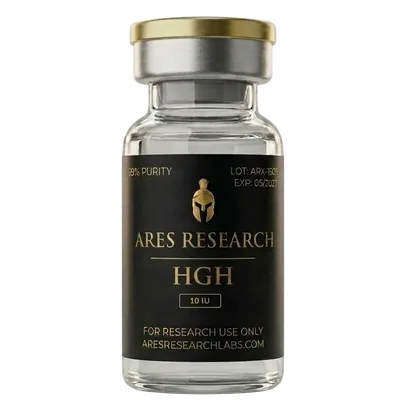
Understanding Peptide Purity Claims
What "99%+ purity" actually tells you — and the three questions (whom, how, on what) that give any purity claim real meaning.
"99%+ purity" appears on nearly every research peptide site, which is exactly why the number alone tells you almost nothing. What gives a purity claim meaning is the evidence and methodology behind it. This is an educational overview for research context.
A number is only as good as its source
A purity percentage is a *result* — and a result is only meaningful if you know how it was produced and who produced it. Two suppliers can both print "99%+" while standing on completely different evidence: one with a named-lab, batch-specific, method-documented COA, and one with a single reused historical certificate. Same number, very different confidence.
The three questions that give a purity claim meaning
1. Measured by whom? Was purity measured by a named, accredited third-party lab, or self-reported in-house? Independent and named is the stronger position.
2. Measured how? HPLC is the standard method for purity; mass spectrometry confirms the compound's identity. A claim backed by shown methods beats a bare percentage.
3. Measured on what? Is the result batch-specific to the lot you'll receive, or a "golden batch" figure reused across all inventory? This is the difference-maker most buyers overlook.
Why "identity purity" and "purity" aren't identical phrasing
Some suppliers specify "99%+ identity purity," which points to identity confirmation (mass spec) alongside the purity figure. It's worth reading the exact phrasing rather than assuming every "99%+" refers to the same measurement. Precise language usually signals a supplier that understands what it's reporting.
What purity doesn't cover
Even a strong purity result is one dimension of quality. It doesn't speak to endotoxin screening, storage, handling, or lot-to-lot consistency over time. That's why the most transparent suppliers publish more than a single number — they show the surrounding data so the purity figure sits in context.
How to read the claim on any site
When you see "99%+," don't accept or dismiss it — interrogate it with the three questions above. A supplier that can answer *whom, how, and on what* is operating at the transparency standard the category should hold. Ares Research publishes its purity data, methods, and testing approach on the /transparency page precisely so the number isn't asked to stand alone.
*Educational / research context only. Ares Research supplies compounds for laboratory and research use. Not for human consumption.*
Related reading
- Testing & COA transparency
- What third-party testing means
- How to vet a supplier
- The 2026 supplier checklist
Running the numbers for a protocol? Use the research calculators to convert mg, mL, and syringe units.
Related Research Articles
What Third-Party Peptide Testing Means
COA versus no COA: what independent testing proves, what HPLC and mass spec measure, and why batch-specific certificates matter most.
The Research Peptide Supplier Checklist (2026)
A 10-point buyer-side scorecard for evaluating any research peptide vendor consistently, from named labs to support responsiveness.
How to Vet a Research Peptide Supplier or Vendor (2026)
The full 2026 checklist for evaluating any research peptide supplier or vendor: named third-party labs, batch-specific COAs, published test methods, sourcing transparency, shipping, pricing sanity checks, and red flags.
Understanding Peptide Purity: HPLC, Mass Spec, and Why ≥99%
A comprehensive guide to how research-grade peptide purity is measured. Covers HPLC (high-performance liquid chromatography), mass spectrometry, what purity percentages mean in practice, common impurities, and how to read a certificate of analysis for research peptides.
High purity compound grading standards for lab researchers
Discover essential high purity compound grading standards for researchers. Make informed decisions to ensure assay validity and optimize costs.
How to use HPLC purity testing research materials
Discover how to select HPLC purity testing research materials for accurate results. Enhance your research with effective methods and insights.
Neutral, moderated research discussion. Laboratory use only.
More compound guides, hubs, and educational research materials.